Wednesday, 1 March 2017

5 Best Jobs for Retirees in 2017 Sheiresa Ngo


Retirement sign
Retirement | iStock.com
If you’re nearing retirement but can’t see yourself completely leaving the workforce, whether due to financial necessity or to keep boredom at bay, there are plenty of jobs to consider for your second act. Work doesn’t have to come to a complete stop unless you want it to. There are many opportunities for you to make the most of your retirement while earning an income and making a difference in people’s lives.
If you’re considering the idea of a part-time job after you exit the workforce, you’re not alone. Roughly 54% of older workers (those 60 years of age and older), said they plan to work after retirement, according to a CareerBuilder retirement survey. This is an increase from 45% the year before.
Career expert Nancy Collamer said work after retirement can be a good time to reinvent your career. “Whether out of necessity, desire, or a combination of the two, it is clear that millions of boomers will soon be looking for ways to reinvent their careers without a traditional 9-to-5 job. We will work during a phase known as semi-retirement—the stage that occurs after the big full-time job ends and before full retirement sets in,” said Collamer in Second-Act Careers: 50+ Ways to Profit from Your Passions During Semi-Retirement.
This time around, you can choose work you enjoy and work on your own terms. Here are five work options that are fun, flexible, and pay the bills.

1. National park worker

Angel's Landing in Zion National Park
Angels Landing in Zion National Park| iStock.com
Why not see some of the most beautiful parks in the world while making a few quick bucks? If you’re looking for a slower pace and a serene environment, consider taking on a job at one of America’s breathtaking national parks. There are several jobs to choose from, including management, grounds maintenance, food services, and retail. The median salary for a national park service employee is $54,000 annually, according to career site PayScale.

2. Adjunct professor

Teacher and student
Teacher and student | Angela Weiss/Getty Images
Put your years of experience to use by teaching an introductory class in your field. Don’t let your level of education hold you back. If you didn’t earn a Ph.D., have no worries. Depending on the area of study, a Ph.D. isn’t always necessary to teach on the college level. Many adjunct professors hold a master’s degree. The median annual salary for an adjunct professor is roughly $31,000. However, PayScale notes that the salaries in big cities like New York and Miami pay bigger bucks. New York adjunct professors, for example, can earn an average of $88,000 a year.

3. Consultant

Man at work
Businessman | iStock.com
If you’d rather work on short-term projects instead of staying with one company, consulting may be just right for you. The first place you can go to seek project-based work is your current employer. If you haven’t left the workforce yet, or if you left a while ago but still have contacts at the company, ask if your employer would like to hire you on a freelance basis. This may be the best option since the managers are familiar with you and already know the quality of your work. There are many types of consultants, and the pay will depend on your industry in location. However, the average consultant salary is roughly $92,564 a year, according to career site Glassdoor.

4. Child care worker

childern sitting together at a birthday party
Kids eating sandwiches at a party | iStock.com
If you enjoy being around children, you may want to look into working in the child care field. You could start by offering to take care of your neighbor’s children. You may even consider working at a day care center or starting your own home-based family day care center. The average salary for a child care worker is $9.12 an hour.

5. Freelance writer

Man typing on computer
Writer | Thinkstock
Working as a freelance writer can give you the freedom to work from home while earning an income. Freelance writers can set their own hours and don’t have to worry about the stress of commuting to the office every day. You can find freelance jobs through word-of-mouth referrals as well as job boards dedicated to freelance writing jobs. The average salary for a freelance writer is about $28.50 per hour.

Culled from Money & Career Cheat Sheet

Tuesday, 28 February 2017

Millionaire wife fights divorce settlement after cheating husband given HALF her fortune


Julie and Robin Sharp's "brief and childless marriage" began to unravel when she discovered he was "pursuing another relationship"

Julie Sharp is fighting the divorce settlement
A city trader who made millions in "eye-watering" bonuses is fighting for a "fair" divorce settlement - after her ex walked away with nearly half the £7million fortune she earned.
Millionaire Julie Sharp was married to ex-husband Robin for four years after they set up home together in 2007.
When they met, both were already earning around £100,000 - with Mr Sharp working as an IT consultant and Mrs Sharp a successful energy trader.
But as the relationship took off she began to rake in massive bonuses due to the "soaring" energy market, Gloucester Live reported .
She amassed bonuses totalling £10.5million in just five years, London's Civil Appeal Court heard.
On the strength of her "windfall", they bought two lavish country houses in Gloucestershire - the second with a £2million price tag which cost £500,000 to refurbish.
Mrs Sharp, now 44, took pleasure in giving her partner expensive presents - including a top-of-the-range Aston Martin.
But despite her sudden wealth she was adamant that her husband "didn't see her as a sort of cash machine".
Divorcee dragged screaming from court after hearing she might lose home to ex-husband 10 years AFTER they split
In September 2013, Mrs Sharp learnt that her husband "had been pursuing a new relationship for some time", her QC Frank Feehan, explained.
Their "brief and childless marriage" began to unravel - with Mrs Sharp petitioning for divorce in December 2013.
Their rows over money were hammered out before High Court judge, Sir Peter Singer, who in November 2015 allocated Mr Sharp £2,737,000 in a "clean break" award.
The couple's total assets amounted to around £6.9million - with virtually all the wealth stemming from the wife.
Mrs Sharp, a mathematics graduate from a "modest financial background" who worked diligently to carve out her high-flying career, is now appealing that ruling.
Mr Feehan criticised the judge's approach as "intrinsically unfair" in light of the brevity of the marriage, lack of children, and her massive financial contribution.
Despite her stellar earnings, the judge approached the case on the basis of a 50/50 split, although he reduced Mr Sharp's payout to reflect "unmingled" assets that his wife built up before the marriage.
"The notion that equal sharing applied in this case made for an unprincipled decision," Mr Feehan told three Appeal Court judges.
Mrs Sharp had proposed that her ex should walk away with £1,197,000, which would more than cover his needs, he added.
Throughout their time together the couple maintained largely separate finances, he added, "earning and spending their own money".
They took turns to pick up the bill when dining out and, during the marriage, Mr Sharp himself accepted the "bonuses were not his".
He "went out of his way to explain that he did not see her as a sort of cash machine on whose financial resources he would have a call", said Mr Feehan.
And although Mrs Sharp had shelled out on "expensive gifts" for her spouse this did not reflect "shared finances", said the QC.
Robin Sharp was awarded nearly half of his wife's fortune
One of her gifts was an Aston Martin, but Mr Feehan termed this a "very lavish 'boy's toy' which she was happy to give out of love".
It was her wealth which enabled the couple to buy their two luxury homes, the court heard - the first of which was acquired by her before they wed.
However, Mr Sharp, aged 43, insists he made a major contribution by project managing and carrying out renovation works on their two properties - particularly after he took redundancy in 2012.
That was after Mrs Sharp bought their second home - in Shurdington, near Cheltenham, a sprawling six-bedroom manor house with two acres attached.
Mr Sharp's QC, Jonathan Southgate, said he deserved half of the marital pot and there was ample evidence of the couple's intentions to pool their resources.
Even though Mrs Sharp had not paid her bonuses into a joint account this was common in many "traditional" marriages where the breadwinner retains earnings and "pays housekeeping to the other spouse", he argued.
Mr Sharp was clear in his evidence that "they agreed he should take redundancy and stay at home - redeveloping their home and supporting their joint life together".
The couple originally met while Mrs Sharp was working as a coal industry specialist in Swindon, the Appeal Court heard.
She was earning £135,000 yearly, before bonuses, while her spouse, who at one time worked for Cisco, brought in £90,000.
There was no real "intermingling" of their cash during the marriage, claimed Mr Feehan, although Mrs Sharp had paid large cash instalments to her ex during 2013 towards home improvements.
"The documentary evidence is plain," argued the QC. "There was never a joint approach to funds in this marriage.
"The oral evidence is also plain: the husband accepted clearly that such was the way they lived their life together."
Mr Southgate, however, backed the High Court judge's handling of the case.
"The judge found that the evidence did not support her case that there was a deliberate and agreed intention to maintain separate finances," he told the court.
Overall, the judge's ruling was in line with "the usual sharing approach to divorce", the QC argued.
And there were no compelling reasons to "depart from that approach".
Lords Justice McFarlane, McCombe and David Richards have now reserved their decision on Mrs Sharp's appeal.

Culled from Mirror

Monday, 27 February 2017

Fatcat bosses rake in massive pension perks while millions of workers face hardship-Graham Hiscott


The Government this week paved the way for firms to slash the pension payouts of 11 million workers

BP chief Bob Dudley gained a £4.4m perk
Fatcat bosses are raking in massive pensions perks while millions of workers are facing hardship in old age, a Daily Mirror investigation has revealed.
The Government this week paved the way for firms to slash the pension payouts of 11 million workers.
Yet companies are pouring a packet into directors’ retirement funds.
Research by the Mirror and shareholder group Manifest found that the average FTSE 100 chief executive gets the equivalent of 30% of their salary in pension payments annually.
But firms put an average 6% of a shopfloor worker’s salary into their pension. That produces a paltry £1,300 a year, on average.
Antonio Horta Osorio has a 50% pension perk
Primark boss George Weston got a 68% boost
By contrast, George Weston, boss of Primark owner Associated British Foods, may well pocket £550,000 a year when he retires. He had £711,000 put into his pension pot in 2015.
Associated British Foods called his pension “a mathematical outcome of longevity of service, age and salary”.
BP’s Bob Dudley had £4.4million pumped into his pension that year – more than three times his salary. BP said the payment was distorted by the fact that it was a US scheme.
Alison Cooper received £590,000
Erik Engstrom is given 67% for his pension
Business information firm RELX put £766,000 into chief executive Erik Engstrom’s pension in 2015, while Alison Cooper, who runs tobacco giant Imperial Brands, got a £590,000 boost. Taxpayer-saved bank Lloyds put £568,000 into Antonio Horta-Osorio’s retirement pot last year.
Tom McPhail, head of retirement policy at broker Hargreaves Lansdown, said: “The system is grossly unfair. There is one rule for senior executives and one for everyone else.”
Earlier this week, a Government Green Paper proposed that troubled firms with defined benefit schemes could “cut or renegotiate” their pensioners’ benefits, potentially affecting 11 million people.
Mirror pension

Thursday, 23 February 2017

7 Questions You Need to Answer Before You Retire - Sheiresa Ngo

Retirement may seem like a long time from now, but it’s closer than you think. Don’t keep putting off your plans to get your finances in order. A survey conducted by the Employment Benefit Research Institute found that American workers are falling behind when it comes to preparing for retirement. You can start the planning process by taking an inventory of your financial situation. Here are some important questions you must answer before you retire.

1. Do you really have enough money to retire?

retirement label on jar filled with coins
Retirement savings | iStock.com
Guessing won’t cut it when it comes to figuring out how much money you’ll need to live comfortably in retirement. It’s not a good idea to leave this part of retirement planning to chance, because it can be difficult to catch up once you realize you’re off track. Among the Americans surveyed in the Employment Benefit Research Institute study who said they are not saving enough, 20% said they plan to save more later, while 15% said they will have to work during retirement, and 14% said they have no choice but to delay retirement. Not knowing how much you need to retire means you’re not going to be saving enough in the meantime. If you don’t know the answer to this question, there are plenty of retirement tools available to help you figure this out. One tool recommended by the experts is the T. Rowe Price retirement income calculator.
If you come to the conclusion that you are indeed behind on retirement savings, you can still maximize contributions each year. For 2016, you’re allowed to contribute a maximum of $18,000 to a 401(k). If you’re age 50 or older you can make an additional catch-up contribution of $6,000.

2. How much debt do you have?

debt
Debt | iStock.com
Take a moment to tally up all of your outstanding debt. Expenses such as high-interest credit cards and a mortgage will deplete your retirement income. Once you know how much you owe, make an effort to pay down as much of your debt as possible before you finally hang up your work hat. It will be tough to pay off debt once you’re retired and living on a fixed income, so take care of repayment sooner rather than later.

3. How will you pay for long-term care?

Medical team standing outside healthcare facility.
Healthcare workers | iStock.com/monkeybusinessimages
You may be feeling good and healthy as ever right now, but your chances of needing long-term care increase with age. Those turning 65 years old today have a 70% chance of needing some type of long-term care, according to LongTermCare.gov. In addition, roughly 20% of today’s 65-year-olds will need long-term care for more than five years. In light of these statistics, it would be in your best interest to have long-term care insurance.

4. When should you apply for social security?

social security card and other documents
Social security card | iStock.com
It depends. Experts are divided about whether you should delay Social Security until you reach age 70. Those who say it’s a good move reason that waiting will allow you to collect a higher monthly benefit. Whether you choose to follow this advice depends on your individual situation. Some experts say if money is tight once you finally retire, you might want to apply for benefits sooner (age 62 is the earliest you can collect Social Security benefits) rather than later. Other experts say if you can afford to wait, and you’re in relatively good health, you may want to wait it out until age 70.
Waiting until your full retirement age (age 67 if you were born in 1960 or later) to take Social Security benefits will yield a benefit amount that’s roughly 30% higher than if you take benefits at 62. Waiting until 70 results in a benefit that’s roughly another 32% higher. On the other hand, if you’re not in such great health and you need the money, by all means apply for your benefits when you’re eligible.

5. Where will you live?

brick house with driveway
House | iStock.com
You’ll need to move to a place where you can stretch your retirement dollars. Retirement life will likely mean lower income and possibly higher health care costs. Do your research or you’ll end up blowing through your nest egg too quickly. Besides cost of living, you’ll also need to consider weather and convenience. As you age, driving may not be a possibility, so make sure to find a residence that will offer adequate mobility. While doing your research, you’ll want to make sure to stay away from these 10 worst retirement cities. Consider these 10 best places to retire instead.

6. What will your retirement expenses be?

piggy bank with dollars
Money and piggy bank | iStock.com
Account for expenses such as the retirement lifestyle you would like to have as well as the cost of medical care. Remember that if you’re in poor health now, you will most likely spend a pretty penny during your golden years when it comes to health care costs. If you want to get a better picture of your future expenses, start by filling out a retirement expense worksheet like the one featured here on the Vanguard website.

7. Have you thought about your social life?

friends enjoying a meal
friends enjoying a meal | iStock.com/monkeybusinessimages
This may seem trivial, but once you stop working you’ll have contact with fewer people. If most of your friends and former co-workers are still working, they may have less time for you. They also may be more focused on work, so there may be fewer experiences to share. Make sure you’ve prepared for your social life after retirement. You can do this by planning to connect with a local senior center or volunteering within your community. Just make sure you plan to get out and socialize. A study by the Institute of Economic Affairs found that retirement can increase your clinical depression risk by 40%. This is because many workers closely link their identity and sense of purpose to their jobs.

Culled from Money & Career Cheat Sheet:

Wednesday, 22 February 2017

5 Warning Signs You’re Headed for Financial Disaster -Sheiresa Ngo


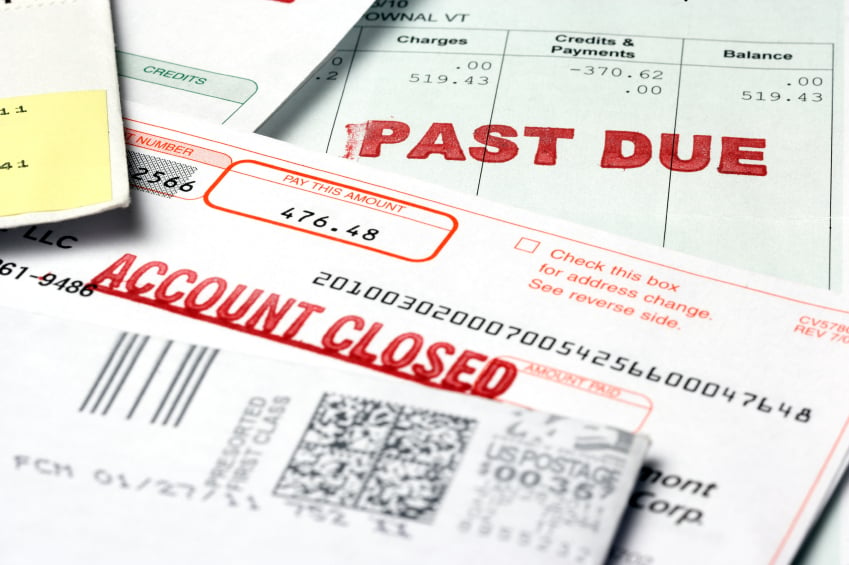
Past due bills | iStock.com
Financial problems have a way of sneaking up on you. At first you may start borrowing money to make a purchase or using your credit cards a little too often. Before you know it, you’re facing a mountain of debt. You may be content with denying you have a problem with managing money. However, burying your head in the sand will catch up to you if you don’t take the proper steps get things under control. Here are a few signs you’re headed for financial disaster.

1. You often borrow money from friends and relatives


Money | Thinkstock
Many of us run into a financial snag from time to time, but if you find yourself constantly asking your friends and family for a loan, and you have trouble paying them back — or at all — this is a warning sign. In addition, borrowing money from loved ones and repaying late or not returning the money can lead to even more strain in your personal life.

2. Bill collectors are calling you — and it’s not to say hi

Personal with phone
Phone call | Justin Sullivan/Getty Images
Ignoring your bills won’t make them go away. You may feel a temporary sense of comfort and relief when you toss your bills into a pile on your desk, but that won’t resolve the issue. Your money problems will just continue to worsen. Soon enough, your creditors may come looking for you.

3. You rely heavily on credit


Using credit card | iStock.com
If you often reach for your credit card, even for small purchases, this is an indication that you are spending more than you earn. Relying too heavily on credit and maintaining a balance from month to month can cause your debt to balloon, leading to even more financial strain. When you get to a point where you can’t afford basics like groceries or gas, it’s time to reevaluate your budget.


4. You’re living paycheck to paycheck

money burning
Burning money | iStock.com
If you find that you frequently overdraft and you’re just barely making it from one paycheck to the next, you are living on the financial edge. Burning through your cash faster than you earn it is asking for trouble. All it takes is one major financial emergency to put you in a crisis. The key is not to wait until a crisis hits before taking action. Once you start to see that you’re experiencing financial difficulty, begin looking for ways to either spend less or bring in more money.


 5. You tell financial lies

Source: iStock
Lying about money | iStock.com
Are you making purchases and lying to your partner about it? Are you gambling your paycheck away or excessively shopping? If you have lost control of your spending and you’re going to great lengths to conceal your behavior, this could put you at risk for serious financial trouble down the road. Furthermore, taking a reckless approach to money could point to some areas that need to be addressed concerning your mental health. Meeting with a therapist may help you figure out if you have a deeper problem that requires exploration.
Culled from Money & Career Cheat Sheet:

Tuesday, 21 February 2017

Warren Buffett Bets Big on These 9 Stocks for 2017- Eric McWhinnie

Warren Buffett talking
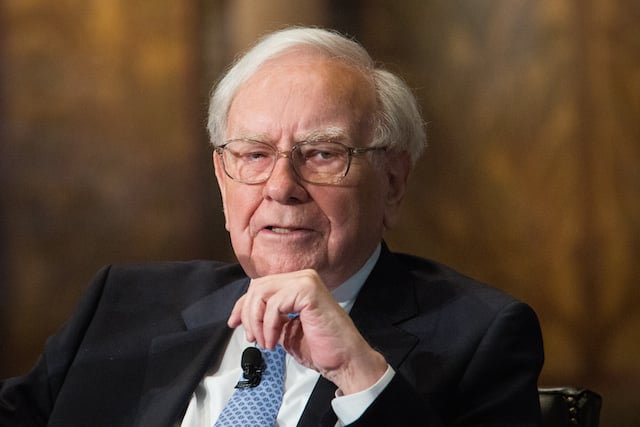
Warren Buffett | Drew Angerer/Getty Images
Warren Buffett is no stranger to multibillion-dollar investments. The Oracle of Omaha has been beating the market for decades while accumulating positions in some of the world’s most popular companies. Courtesy of a new filing, we now have a peek at how the legendary investor deployed capital in the final three months before 2017.
Many institutional investment managers recently filed their mandatory 13F with the Securities & Exchange Commission (SEC). The filing is a quarterly report of equity holdings required by managers who oversee more than $100 million in qualifying assets and must be filed within 45 days of the end of each quarter. The 13F provides a glance at what firms did in the previous quarter, but investors should keep in mind that hedging and trading strategies of each fund are still unknown.
Buffett’s Berkshire Hathaway made several big changes in the three months ended December 31, 2016. In fact, this was one of the most exciting 13F releases from Buffett and company in recent history. Buffett also recently disclosed that Berkshire Hathaway purchased a net $12 billion in stock since the presidential election.
The conglomerate sold off its stakes in Deere and Kinder Morgan, two positions that had already been reduced in a prior 13F release. Berkshire Hathaway decreased its stakes in Verizon and Wal-Mart, but opened new positions in Monsanto, Siri XM, and Southwest Airlines.
The largest investments in Berkshire Hathaway’s portfolio include some of the most popular blue chips known to Wall Street. Let’s take a look at Berkshire Hathaway’s top nine holdings according to dollar value at the end of December, not including Buffett’s option to purchase 700 million shares of Bank of America at any time prior to September 2021 for $5 billion. No. 7 is new to our Cheat Sheet list of Buffett’s biggest holdings, but it’s one of the most loved companies in the world.

9. Delta Air Lines

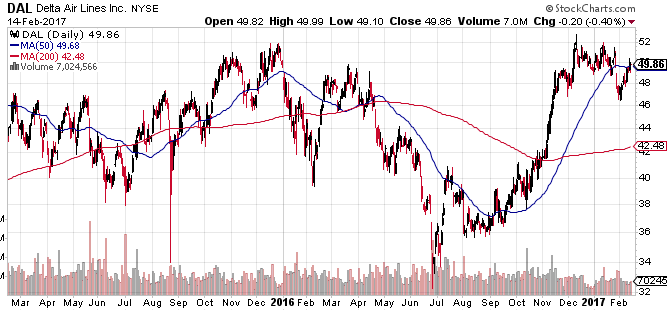
DAL stock price | StockCharts.com
A few years ago, Buffett called airlines a “death trap for investors.” Times have changed. Buffett hasn’t said exactly why he likes airline companies so much now, but the evidence is clear, he’s bullish on the industry. At the end of the fourth quarter, Berkshire Hathaway held about 60 million shares of Delta, worth $3 billion, and significantly greater than the 6.3 million shares held in the prior quarter. Investors should also keep in mind that Berkshire Hathaway opened a new position in Southwest Airlines, and increased its stakes in American Airlines and United Continental during the fourth quarter.

8. U.S. Bancorp

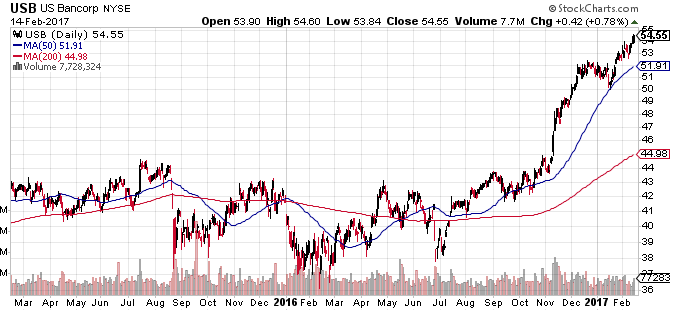
USB stock price | StockCharts.com
The financial industry is no stranger to Buffett. Berkshire Hathaway held 85.1 million shares of U.S. Bancorp at the end of the fourth quarter, worth $4.4 billion. The position is unchanged from the prior quarter, but a recent rally in share price continues to keep U.S. Bancorp as one of Berkshire Hathaway’s largest holdings.
U.S. Bancorp is based in Minneapolis and has nearly half a trillion dollars in assets. It’s the parent company of U.S. Bank National Association, the fifth largest commercial bank in the United States. The Company operates 3,106 banking offices in 25 states and 4,842 ATMs. In October, MONEY named U.S. Bank the Best Big Bank in a tie with TD Bank.

7. Apple

AAPL stock price | StockCharts.com
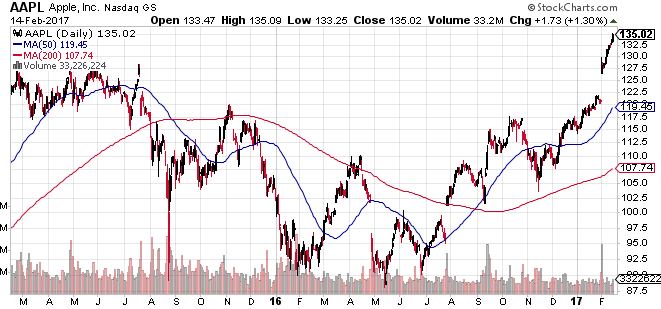
The beloved Apple is on our Buffett Cheat Sheet list for the first time. Berkshire Hathaway more than tripled its prior stake and now owns 57.4 million shares of the tech giant, worth $6.6 billion, as of the end of 2016.
Despite concerns about growth, Apple doesn’t appear to be slowing down. The company sold 78 million iPhones in the holiday quarter, setting a new record. Apple also set new revenue records for the iPhone, Services, Mac, and Apple Watch. Furthermore, Apple’s cash hoard of $246 billion will likely continue to reward investors with dividends and share buybacks for years to come. Apple returned $15 billion to investors in the fourth quarter alone.

6. Phillips 66

PSX stock price | StockCharts.com
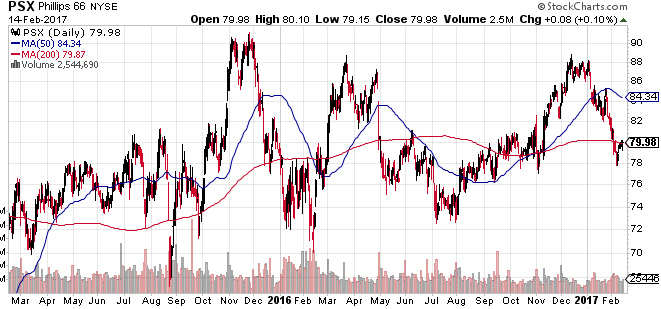
The multinational American energy company was originally thought to be sold off by Buffett in the second quarter of 2015. As it turns out, Buffett had the stake classified as confidential so it wouldn’t show on the 13F and allow copycat investors to run the price up. At the end of December, Berkshire Hathaway held 80.7 million shares (worth $7 billion), unchanged the previous quarter, according to the 13F. Phillips 66 is Berkshire Hathaway’s No. 6 largest holding, and appears to be a favorite, especially when its share price dips toward $75.
Unlike oil giants Exxon Mobil and Chevron, Phillips 66 has escaped most of the carnage seen in the energy sector. Buffett told CNBC in 2015: “We’re buying it because we like the company and we like the management very much.”

5. American Express

AXP stock price | StockCharts.com
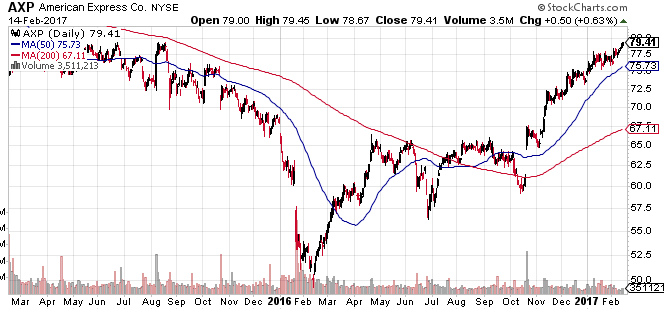
Warren Buffett has liked American Express since at least the 1960s. Today, the credit card giant is Berkshire Hathaway’s No. 5 largest holding. At the end of the fourth quarter, Berkshire Hathaway held 151.6 million shares (worth $11.2 billion), unchanged from the prior quarter.
American Express shares have struggled in recent years. Costco severed ties from American Express after 16 years in business with each other. American Express was able to make a deal with Sam’s Club, but it did little to comfort Mr. Market at the time. However, shares found a bottom in early 2016 after touching $50, and are in the green this year. Berkshire Hathaway’s positions in Mastercard and Visa come nowhere close to the size of its American Express position.

4. International Business Machines

IBM stock price | StockCharts.com
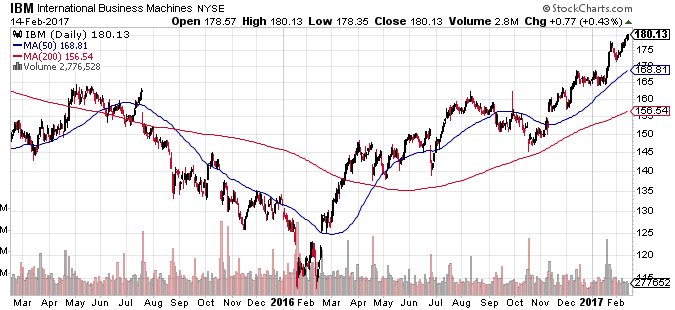
If you’re looking for a reason not to follow in Buffett’s footsteps, IBM used to be it. The company was the worst performer in the Dow Jones Industrial Average in 2014, and one of the worst performers in 2015. In fact, IBM’s revenue has fallen for 19 consecutive quarters. Nonetheless, Buffett isn’t giving up and you might not want to either. IBM’s stock price has surged from $115 to $180 over the past year, providing yet another example why thinking about the long-term may help you avoid making bad investing decisions.
IBM is Berkshire Hathaway’s No. 4 largest holding. At the end of the fourth quarter, the company held 81.2 million shares (worth $13.5 billion). IBM shares still offer a dividend north of 3%.

3. Coca-Cola

KO stock price | StockCharts.com
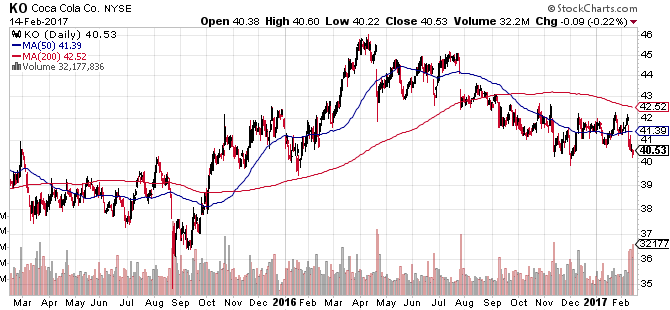
Coca-Cola is the most predictable position at Berkshire Hathaway. Buffett is on record saying he will never sell his shares in the world-renowned beverage company, and can often be seen holding a Cherry Coke. At the end of the fourth quarter, Berkshire Hathaway held the usual 400 million shares of Coca-Cola (worth $16.6 billion), making it the company’s No. 3 largest holding.
While sugar water has seen its fair share of problems in recent years, Coca-Cola shares have been experiencing support near $40 since late 2015. Coca-Cola has investments in Monster Beverage, Keurig Green Mountain, and Suja Juice. The company is also making operating changes to drive stronger growth and save $3 billion annually by 2019.

2. Wells Fargo

WFC stock price | StockCharts.com
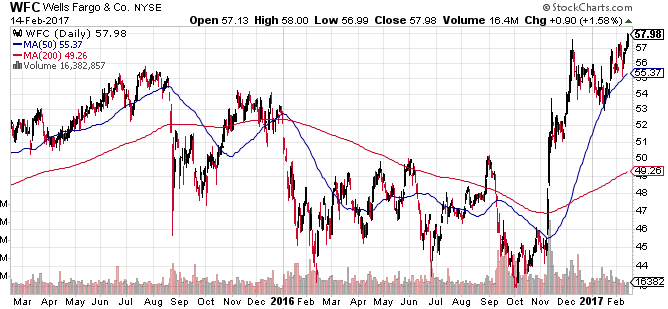
America’s second most profitable bank is also Buffett’s No. 2 largest holding. Berkshire Hathaway held 479.7 million shares (worth $26.4 billion) of Wells Fargo at the end of the fourth quarter. Somewhat surprisingly, this was once again unchanged from the prior quarter.
Wells Fargo quickly become Buffett’s most controversial holding in September. The mega bank finally admitted it created roughly 2 million fake accounts, which inflated sales numbers and banking fees. Wells Fargo had an incentive program in place that essentially forced employees to commit fraud or risk being fired for underperforming unrealistic sales goals. More than 5,000 workers related to the scandal were fired. Wells Fargo CEO John Stumpf also resigned in the wake of the financial abuse. Buffett appears to be standing by Wells Fargo for now.

1. Kraft Heinz

KHC stock price | StockCharts.com
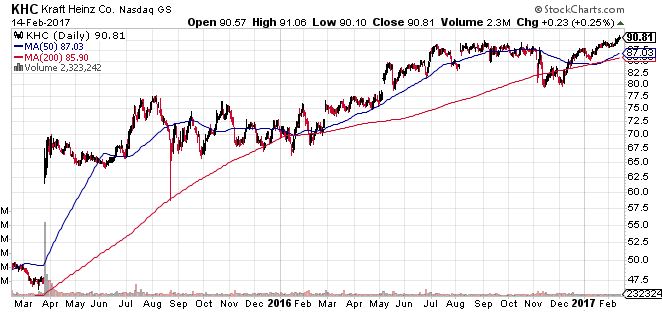
Berkshire Hathaway’s position in the merged Kraft Heinz has been listed on the 13F for the past six quarters. Buffett teamed up with investment firm 3G Capital to takeover Kraft Foods with Heinz. The deal created one of the biggest food companies in history, with over 10 different brands valued at more than $500 million each. More recently, the company has laid off thousands of workers to cut costs and “consolidate manufacturing across the Kraft Heinz North American network.” In August, Kraft Heinz raised its quarterly dividend 4.3% to $0.60 per share.
Buffett and company held 325.6 million shares of Kraft Heinz at the end of December, worth a whopping $28.4 billion. That makes it Buffett’s largest portfolio holding.
Disclosure: Author holds BRKB and AAPL
Culled from Money & Career Cheat Sheet:

Thursday, 16 February 2017

4 Reasons Why You Can’t Get Out of Debt - Sienna Beard


Source: iStock

Debt can be crippling | iStock.com
Too much debt can ruin your life. You may not be able to get a mortgage for a house, you might face never-ending credit card payments, and you might even face court action if you can’t pay your bills. Even a small amount of debt can bring on obnoxious collector calls and make it difficult to build your credit. If you have wanted to eliminate or cut your debt, and you’ve tried, but you can never seem to really get your debt in control, then something might be in your way. Some people find that it is difficult to cut debt on a limited budget, but it is possible to do so with careful planning and smart lifestyle changes. In addition, if you’re currently overspending, using credit cards too often, or not keeping a budget, all of these choices can make it difficult to get out of debt.

1. You don’t keep a budget

Keeping a budget is essential in order to become financially stable, and to eventually get out of debt. Even if you regularly pay your loan payments, you won’t be able to pay much extra, or even pay every month, if you don’t keep track of your spending and stay in budget. Without regular budgeting updates, you won’t know how much you are spending, or how much extra you have. This will make it difficult to prioritize cutting down your debt, because if you are overspending each month, you will risk going even further into debt.
A Gallup poll found that only one in three Americans keeps a detailed household budget each month. If you are part of this group, and you want to get out of debt, then maintaining your budget is a great place to start.

2. You don’t set financial goals

Person Hand Inserting Coin In Pink Piggybank
Person Hand Inserting Coin In Pink Piggybank | iStock.com/AndreyPopov
Setting financial goals specifically about your debt will help you have a date in mind to pay off your debt. If you owe a lot of money, it can feel like you will never pay it off. However, setting a specific goal will allow you to plan for how much you need to pay off each month in order to meet your goal. In addition, knowing a due date will help you visualize the debt disappearing, which can help motivate you to keep up with your payments.
According to a poll by CreditCards.com, 18% of those polled who were already in debt expected to still have loans when they died. Thinking like this will certainly not help you pay off your debt, but setting financial goals can.

3. You rely too heavily on credit cards

Source: iStock
Credit card user | iStock.com
Credit cards can be helpful and even necessary, but they can also be dangerous. Because of the high interest rates, using credit cards too much (especially if you can’t immediately pay the minimum balance) can truly destroy your budget, and leave you in a long-term debt cycle. The average credit card debt includes $1,128 per card that doesn’t carry a balance, $1,164 per account for U.S. adults with a credit report and a Social Security number, $3,766 per person for U.S. resident adults, and $5,540 per U.S. adult with a credit card.
If the majority of your debt is from credit cards, or you rely too heavily on credit cards, you can reduce your debt by negotiating lower rates, tracking your progress, paying with cash, and implementing other ideas such as those mentioned in this article (like using a budget and making goals).

4. Your priorities are all wrong

yacht
Luxury yacht | iStock.com
It’s nice to have a big house and a fancy car, but if you can’t afford to do so then taking out loans that you can’t afford is a bad idea. If you purchase more house than you can buy, or you buy a car that leads to an expensive monthly payment, it can be difficult to stay on budget and reduce debt. If you are worried about keeping up with your friends by buying fancy suits or shoes, or eating out all the time, you will also find it difficult to eliminate your debt.
The good thing is that you can always change your spending habits. If you’re willing to downgrade your house or your car, and you can stop impulse or peer spending, you can get your finances back on track and cut your debt. Too much debt can be hard to live with, but there are ways to pay your debt down and still have the things you need (and even some that you want). Doing so requires keeping a budget, changing your spending habits, and making and keeping financial goals.
Culled from Money & Career Cheat Sheet