Friday, 10 March 2017

Behind on Retirement Savings? 5 Ways to Catch Up, Fast -Megan Elliott


Young businessman with a briefcase and glasses running
Young man running with a briefcase | iStock.com/master1305
Americans are an optimistic bunch. When it comes to money, most people feel secure and on track to achieve their financial goals, according to Experian’s 2016 personal finance survey. Dig a little deeper, though, and some problems begin to emerge. Three quarters of people say they’re stressed about money at least some of the time and 41% are earning less today than they expected they would be five years ago. Nearly 75% said they felt behind on their retirement savings, including one-third who believed they were too far off track to ever catch up.
What exactly do those who are behind in their savings expect to do once they hit retirement age? Keep working until they drop, apparently. Just over one-quarter of people will stay at their job for as long as they possibly can, a 2014 Federal Reserve survey found. Planning to keep working during retirement isn’t always a bad thing, especially for those who find the idea of a life without a job a bore. But it’s not exactly a solid retirement plan. Layoffs and health problems can force you into retirement earlier than you would like, which is one reason why you also want a healthy nest egg – it gives you something to fall back on if your career goes belly up.
Unfortunately, the average 401(k) balance of just under $100,000 isn’t going to cut it in retirement, even if you do manage to keep working into your 70s. Still, an anemic retirement account doesn’t have to mean a lifetime of work, provided you act now. While nothing beats saving early and often, there are ways to juice your savings so you can increase your chances of enjoying a financially secure retirement. If your 401(k) needs some TLC, consider these five fast ways to catch up on your retirement savings.

1. Invest found money

jar of spare change for retirement savings
Retirement savings jar | iStock.com
When retirement accounts are thin, you need to make any extra dollar you can find work for you. “Take tax refunds, workplace raises, and inheritances and invest instead of spend them,” Willie Schuette, an Ohio-based financial coach with The JL Smith Group, said in an interview with The Cheat Sheet.
Not expecting a raise or tax refund this year? You may still have some extra cash lying around and not even know it. States currently have $41 billion in uncashed payroll checks, unclaimed security deposits, and closed bank accounts, and some of it may be yours. The IRS is sitting on another $1 billion in unclaimed tax refunds. And don’t overlook other assets you might be able to convert to retirement funds. Jewelry, collectibles, antiques, a boat, or a vacation home are items Schuette suggested selling if you’re looking for fast ways to increase your savings.

2. Slash fees

Person Hand Inserting Coin In Pink Piggybank
Person Hand Inserting Coin In Pink Piggybank | iStock.com/AndreyPopov
Investment fees of 2% sound innocuous and perhaps even reasonable. Your money isn’t going to manage itself, after all. But paying an extra 1% or 1.5% in fees cuts eats away at your retirement account. “Even small differences in investments costs can translate into large differences over time,” Schuette said.
How much do you stand to lose? If you had $500,000 account with investment costs of 1.06%, you’d pay $502,000 in fees over 30 years, according to a study by Personal Capital. Increase the investment fees to 1.98%, and you’d pay $936,000 in fees over three decades. (The study assumed a 7% rate of return.) Switching to lower-cost investments is a virtually painless way to make your retirement savings work harder, and the sooner you make this move, the more you stand to save.

3. Downsize

home with for sale sign
House for sale | iStock.com
Retirement is closing in and it’s looking like your nest egg just isn’t going to cut it. Now is the time to consider downsizing, especially if your kids are grown. Turn your home into a retirement asset by selling the property and investing your gains.
“Consider harvesting some of your home equity by scaling down to a smaller less expensive house,” Schuette said. “This creates a double-win for your savings because you increase investment income while reducing certain expenses such as mortgage payments, utilities, property taxes, and insurance.” You can save even more by relocating to a smaller home in an area where taxes and other expenses are lower, Schuette said (though that may not be an option if you’re still working and need to stay close to your current job).

4. Get a second job

plants on piles of euro coins
plants on piles of euro coins | iStock.com/RomoloTavani
Sometimes, you have to work harder now so you can work less later. Thirty-five percent of people Experian surveyed said they weren’t earning enough money to save. If you’re one of them, a second job could be the solution. A part-time retail gig might be an option, as is freelancing or consulting. But don’t overlook more creative ways to boost your income. Driving for Uber, listing a spare bedroom on Airbnb, or finding dog-sitting jobs through DogVacay can pad your income by a few hundred dollars per month, enough to make a meaningful difference in your retirement account balances.
Even earning an additional $50 or $100 per month and putting the money toward retirement could make a big difference in your total savings. A 30-year-old who saves an extra $600 per year, or $50 per month, could have an extra $100,000 in retirement, assuming a 6% return, according to the Motley Fool. The results won’t be quite as dramatic if you’re closer to retirement, but setting aside an extra $200 per month from age 50 to 65 could increase your total savings by tens of thousands of dollars.

5. Get comfortable with investing

stacks of coins representing investments
Stacks of coins | iStock.com
Only 30% of people Experian surveyed said they invested in stocks and bonds. Avoiding those higher risk but potentially more lucrative investments is probably one reason so many are behind on their retirement savings.
If you’re keeping most of your retirement funds in “safe” investments like savings accounts, certificates of deposit, or money market accounts, it’s difficult for your money grow at a fast enough clip for you to accumulate a significant nest egg. Worse, you’re probably not even earning enough to keep up with inflation.
To make your money work for you, you need to get more comfortable with investing. Boosting your returns from 1% or 2% a year to 5% or 6% can mean hundreds of thousands of dollars more for retirement 30 years from now. Not sure where to start? Your 401(k) provider should have a target date fund with an appropriate mix of investments for people in your age group. Or check out The Cheat Sheet’s beginner’s tips for investing.

Culled from Money & Career Cheat Sheet

Thursday, 9 March 2017

5 Secrets People Should Keep From Their Co-Workers - Erika Rawes


gossip among co-workers
Gossip among co-workers | iStock.com
How well do you know the people you work with? How well do they really know you?
According to data published on Fast Company, workers in the U.S. have a median tenure of around four and a half years. This means, a typical worker (who lives until the 2011 average life expectancy of 78.7) spends around 6 percent of the years of his life at a particular job. You could get to know a person pretty well during that time. Especially, a person you spend 40 hours each week with.
“Joe’s favorite food is chicken Alfredo” and “Jane doesn’t like it when people use trendy phrases like ‘cray-cray’ or ‘totes’.” You may have learned the types of things that irritate your co-workers, their individual strengths and weaknesses, their sense of humor, and a variety of superfluous information about them. Your co-workers may also have learned this type of information about you, as well.
But, do your co-workers know you as well as say, your roommate or a close friend does? Probably not. Even though you spend a great deal of time with the people you work with, it’s generally unwise to tell them personal information that doesn’t pertain to work. Think of it this way: If you wouldn’t want your boss and the rest of the office knowing something about you, it’s probably best to keep the information to yourself.
Here are five specific things you should not share with the people you work with. Even though No. 3 is more acceptable and legal than ever, you still need to be cautious.

1. Your personal and political beliefs

donald trump and ivanka trump
Donald and Ivanka Trump | Mark Makela/Getty Images
Work is usually not the place to talk about your views on abortion, hot button topics, incompetent politicians, and politics in general really. You cannot assume that everyone has the same views as you do, because everyone sees things differently. When you share your views on political and societal issues –especially if you have extreme left or right-leaning views — people may not take your views on other topics — workplace topics — as seriously.
“You want to put some brakes on your conversation,” says author Anna Post in a Wall Street Journal publication. “People assume that others think what they think, that everyone wants to hear their opinion. But politics can really divide.”

2. Medications and certain medical conditions

prescription pills falling out of a bottle
Pills spilling out of a bottle| iStock.com
You may be comfortable telling you co-workers about a flu you had — you may even be comfortable telling them you’re diabetic (depending on how comfortable you are around the people you work with). But some medical conditions are not as common, some are embarrassing, and others have a stigma attached to them. Of course, you should follow any policies your company has on dealing with illnesses. But, in most cases, personal and private things about your medical history, like the prescriptions you take, is information you should refrain from sharing with your coworkers.
If you are in a situation where you have a serious illness and, to perform your job effectively, it’s necessary that you share your medical limitations with your co-workers, this still doesn’t mean you have to tell them your specific diagnosis or medications.
“This may mean that instead of telling co-workers you were recently diagnosed with fibromyalgia, you could say you have a disease that means you will periodically have debilitating fatigue that lasts for up to 48 hours and that you need to figure out a way to accommodate for that without getting in the way of the team’s productivity,” says Forbes.
The goal is to focus on the task at hand, avoid having your illness be a distraction in the workplace, and do everything you can to promote having the office function normal, while still receiving any and all accommodations you need.

3. Alcohol or marijuana use

cannibis joint and herb, marijuana
A cannabis joint | iStock.com
Although medical marijuana is legal in nearly half of the country and recreational pot is legal in some places as well, unless you work at a place that deals in marijuana, it’s probably a good idea to keep your marijuana use to yourself.
People are still absorbing the whole marijuana legalization concept and it may come as a shock to your co-workers to find out that you get high on your downtime (if applicable).
If you go out to bars and drink alcohol on the weekends — or if you had a wild and crazy night partying last night — you should keep that to yourself while at work, too. This is a touchy subject for people as around 20 million Americans are affected by alcohol or drug dependency.

4. Salary information


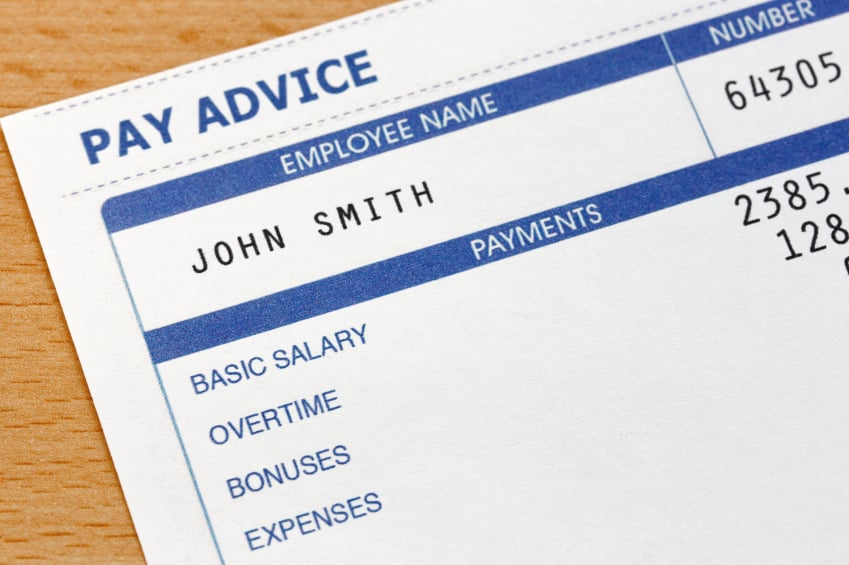
Payslip mock up on a tablePaycheck | iStock.com
“How much do you make, Joe? What about you Jane? I make $10,000 less than both of you, that’s not fair.” Most career coaches advise against polling your co-workers about their pay.
“The risks include your co-worker becoming jealous of you (or you getting jealous of them when you realize you’re underpaid), your manager finding out you did this and punishing you..or your co-worker blabbing what you make all around the office,” says career coach Nicole Williams, the connection director for LinkedIn in a Forbes publication.
If you feel you are being unfairly treated or you are severely underpaid, you have the option to ask those around you but you have no real way of knowing whether or not they are telling you the truth. Also, what are you going to do with the information? If you want a raise, it’s probably best to show your employer you deserve more money because of your skills and work ethic, and not because Joe and Jane make more money than you do.

5. Financial or family problems

Someone flipping through a stack of money.
Cash | Ian Waldie/Getty Images
“My house is being foreclosed on an I don’t know where I’m going to live. My wife and I are getting divorced, too, and she’s taking my dog, Snuffles with her. I’ve lost everything,” you hear one co-worker say to another.
It can be tough to get through each work day when you’re dealing with family or financial problems. Your mind may be focused on those issues, instead of on work and you may be tempted to talk about them with someone — anyone — so that you can get to feeling a bit better. Try to refrain, though, as you more than likely don’t want this personal information about you going around the office and once your troubles have passed, you may regret your decision to share.
Culled from Money & Career Sheet

Wednesday, 8 March 2017

6 Ways to Maintain a Debt-Free Lifestyle -Chloe Della Costa


debt-free man celebrating financial freedom
debt-free man | Thinkstock
It might appear impossible, but many consumers succeed in living their entire lives without any debt. People of a variety of ages and income levels have made this choice. It’s not an easy feat, but if it’s something you truly want, don’t let naysayers talk you out of it. Some dedicated savers have even seen results after committing to a spending fast or spending diet, in which participants set limits on how much money they can spend on certain needs and wants. There are countless methods out there for consumers looking to cut spending, pay back debt, or avoid it all together. The important thing is to select a system that works for you. You know what your weaknesses are, so choose accordingly.
The Urban Institute found 35% of American adults have a report of debt in collections. This can include non-mortgage debt that is more than 180 days past due, such as a credit card balance, medical bill, or utility bill. There are a number of ways to find legitimate debt assistance or helpful strategies for coping with debt. This article’s primary focus is the practical lifestyle choices that will help consumers avoid accruing debt in the first place. While this commitment requires tremendous discipline, you may find that it is well worth it to revel in the knowledge that not a dime of your hard earned money is being wasted on paying interest. Whether you’ve held debt in the past or not, it is within your power to keep it out of your life going forward. Here are six ways to completely avoid incurring debt.

1. Build a large savings

Working toward a sizable savings account is difficult, but it’s also the most important way to stay out of debt. Think of your savings as preparation for unexpected expenses. This way, when medical bills or car repairs pop up, you won’t bat an eye. Saving is also essential for long-term expenses you might not even be planning for yet, such as a child’s education or a new home. Your savings will come in handy for more enjoyable purchases as well, such as an impromptu trip. But without a hefty balance in your savings account, life’s unexpected costs will sneak up on you, posing a threat to your debt-free lifestyle. Keep in mind that by living a life without loans, you will be cutting out a lot of monthly payments that other consumers take on, creating more room in your budget to maintain a healthy savings.

2. Pay off credit card transactions immediately

paying off a credit card
Pay off credit cards | iStock.com
It’s not necessary to deal exclusively in cash in order to avoid debt. For some, it helps to use physical currency to avoid making impulse buys or running up a huge credit card balance. A credit card makes certain things easier, such as traveling, renting a car, or making hotel reservations, but charging purchases isn’t the only way to build credit. If you know yourself, and a credit card isn’t something you can handle, don’t get one. Otherwise, don’t be afraid to use credit cards to your advantage for rewards points and/or cash back. If you decide to have a credit card or even more than one, make it a strict rule to pay off each purchase you make on the same day. Never wait for the monthly bill. This will force you to actually think about how much money you have in your budget before you swipe.

3. Buy a cheap used car

used car sign
Car lot | Saul Loeb/AFP/Getty Images
Most middle class Americans can’t afford to buy new cars outright, so many opt to take on a car payment. No one needs a car loan. There are plenty of reliable used cars out there. There is risk involved in purchasing a used car, but there is also risk in dealing with crafty salesmen at dealerships, who often upsell you on expensive and restrictive warranties. Do your research on reliable car models, find a good mechanic, and use your best judgment when buying your vehicle. You might just get a great deal on a car that will last for years with relatively little maintenance. Public transportation can be an affordable choice as well, depending on your location, but in rural areas a car could very well be a necessity.

4. Go to community college

glass jar full of coins displaying college
save money at community college | iStock.com
As far as higher education is concerned, students willing to take out loans certainly have more options, and many wisely choose to go this route. However, that doesn’t mean you have to borrow money to get a great education. Many students save thousands by starting at a community college before transferring to a more prestigious university. Scholarships and grants also go a long way. No one can be blamed for choosing to take out student loans, especially for medical school or other specialized programs. But with student loan debt in the U.S. now exceeding credit card debt, many wise students are choosing to slowly work their way through college instead.

5. Rent

for rent sign by townhomes
For rent sign | PAUL J. RICHARDS/AFP/Getty Images
Renting for life sounds like a nightmare to some people, but real estate is not cheap. If you are committed to staying debt-free, housing will likely be your biggest challenge. That said, saving up for a modest home is totally plausible for most middle class Americans (provided you aren’t living somewhere like Southern California). Yes, it could take a long time, depending on your income level, but spending a number of years renting and saving could ultimately be a rewarding experience. Long-term renters know that this lifestyle has its challenges and frustrations, but there are fair landlords out there, and renter’s insurance is affordable. If you are single and living alone is out of your budget, perhaps due to living in a metropolitan area, consider renting a room or subletting until you can find an unusually good deal.

6. Buy only what you need

Shopping for more toys
Buying too much stuff | KENZO TRIBOUILLARD/AFP/Getty Images
Impulse shoppers won’t like this one, but it’s amazing the amount of money that can be saved by practicing one straightforward strategy: Think before you buy. In some cases, think very far in advance of buying. Research the best deals and practice listening to the little voice in your head that asks, “Do I actually need this?” You don’t have to live off the grid or be a hermit to practice minimal consumerism. Life costs money, but you can learn to have fun without spending a fortune. Like anything, it takes practice. If you know you are going to require strict guidelines to stay in the money-saving mindset, make an actual budget on paper and set reasonable rules for yourself.
Culled  from Money & Career Cheat Sheet

Tuesday, 7 March 2017

Organised labour tackles Ebonyi govt. over pension law-Kay Ugwuede


The leadership of Nigeria Labour Congress (NLC) and Trade Union Congress (TUC) have threatened showdown with Ebonyi State Government over conflicting pension legislation being considered by the Ebonyi State House of Assembly.
The two labour centres expressed the concerns via a joint letter dated 21st February, 2017, sent to Governor David Umahi of Ebonyi state and co-signed by Ayuba Wabba, NLC President and Boboi Kaigama, TUC President, respectively.
The unions in the letter which was also sent to the Secretary to the Government of the Federation (SGF); Minister of Labour and Employment; Director General DSS; Inspector General of Police (IGP) and others frowned at the violations of the Pension Reform Act 2004 (as amended) by the state government for the purpose of an urgent review.
According to the leaders of both centres, the agitation was sequel to the report obtained from the NLC and TUC state councils in Ebonyi State alleging that “Pension deductions from workers salaries commenced before the Ebonyi State Pension bill became law, thus making the law to operate retroactively in contravention of the fundamentals of all good laws
“The said law states that the ratio of contribution to the pension fund shall be 5 percent, employer and 8 percent employee in contravention of the provisions of the Pension Reform Act (2004) as amended which puts the ratio at a minimum of 10 percent, employer and 8 percent employee.”
The unions further alleged that “the state government commenced the implementation of the new pensions law without first putting in place requisite processes or structures such as adequate sensitization by both PenCom and the State Government as to the rights of the workers in the scheme, appointment of Pension Managers, establishment of pension management boards at both local and state governments.
“In further contraventions of the state’s own Law (S6), the government made deductions from the salaries of workers who had less than three years to retire, even though our wish would have been five years;
“None of the suggestions or recommendations made by workers in the course of the public hearing by the State House of Assembly was taken on board by the Law, suggesting a woeful dismissal of the workers views.”
Your Excellency, the pension issue is among the other violations delete (the majority of which are labour issues as captured by Conventions 87 and 98 to which Nigeria is a signatory) the state council has brought to our attention.
In consideration of the seriousness of the facts in issue, the leadership of NLC and TUC requested for a meeting with Governor Umahi on Tuesday, 14 March, 2017 or on a date more convenient to you to resolve all outstanding issues.
Meanwhile, the two centres which were part of the amendment of the Pension Reform Act (2004) noted that “most of the concerns of the workers. With all humility, some if not all the safety nets or rights in the Act including the right of contributors to freely choose their PFAs, are the making of the Congress.
“Accordingly, the views of workers should be taken seriously, especially on this matter. Happily, PenCom has developed a model or template for the states. Indeed, most of the states that have keyed into the contributory scheme have improved on the basic provisions in the template.
“It will therefore be shocking and unacceptable if the government of Ebonyi State will use the process of keying into the scheme as an opportunity to enslave workers or deny them their rights.
“Your Excellency, let me specifically refer you to section 31 of the Law that states that, ‘if any other law relating to pensions in the State is inconsistent with this law, this law and that of the Act, the provisions of the Act shall prevail to the extent of the inconsistency.
“Accordingly Sir, I would wish to request you to ensure the right and proper thing be done including the following: All processes as condition precedent before the implementation of the law be followed including an engagement with PenCom.
“The ratio of contributions be corrected to reflect the position of the Law. That Section 17 of the State law be amended to bring it in tandem with the template by PenCom which states inter alia, “State shall pay into the State Government Retirement Bond Redemption fund, an amount equal to 5 percent (and not 1 percent as prescribed by the State Law) of the total monthly wage bill payable to its employees or such other higher amounts as…’
“Five years instead of three be the transition period. In other words, workers who have five years or less to retire from service be exempted from the contributory scheme.
“All deductions made in pursuance of the scheme be refunded to the bonafide workers. The implementation of the law be suspended pending its perfection to reflect the wishes of workers alongside the PenCom template.
“This, Your Excellency will create broad ownership, enhance productivity as well as deepen social justice. As we await your intervention as well as the appointing of a date for our meeting, please accept the assurances of our highest esteem,” the letter read.

Culled from Business day

Monday, 6 March 2017

PenCom, Ngige Query Intercellular over Ex-Workers N230m Pension Debt-PenCom, Ngige Query Intercellular over Ex-Workers N230m - Chineme Okafor


Following a petition raised last week by former workers of Intercellular Nigeria Plc over pension deductions from their salaries but not remitted to their respective Retirement Savings Accounts (RSAs), the National Pensions Commission (PenCom) and Minister of Labour and Productivity, Dr. Chris Ngige, have reportedly issued second-level queries on the development to the management of the company.
Intercellular, which now trades with a new business name, InterC Network, as a data service provider, was accused by its former employees of taking 82 months pension contributions of 400 workers worth N230 million but failed to remit same to their Pension Fund Administrators (PFAs).
Through their association, the former workers consequently invited the PenCom, Economic and Financial Crimes Commission (EFCC), National Communications Commission (NCC), as well as the National Human Rights Commission (NHRC) to look into the allegation with the hope that the company would be compelled to remit the alleged deductions.
But providing an update on the situation to THISDAY on Sunday in Abuja, the spokesperson of the distressed former workers, Mr. Barack Lawrence, stated that Ngige and PenCom had taken up their petition and subsequently issued queries to the management of InterC Network.
Lawrence stated that their petition received the attention of the labour and productivity ministry, as well as other relevant agencies of government. He added that the workers also met with the various agencies of government on the situation.

Culled from Thisday

Friday, 3 March 2017

Want an Early Retirement? 4 Ways to Quit Your Job Sooner-Megan Elliott


a man enjoying retirement on a beach
Early retirement is possible if you play your cards right. | iStock.com
After a brutal day in the office, who hasn’t dreamed of throwing off the shackles of a 9-to-5 job for good? Retire early and you could say goodbye to spreadsheets and conference calls, and hello to a life of freedom and relaxation.
For most, the idea of an early retirement is no more than a fantasy. Yet for a select few, retirement by 45, 40, or even (gasp) 35 is a reality. Even better, you don’t need to be born rich to do it. While it won’t be easy, smart planning and aggressive saving in your 20s and 30s can make it feasible to retire decades sooner than most people, even if you don’t have a trust fund to fall back on, say financial experts.
“Early retirement will not be likely for many, but with proper planning, realistic goals, and discipline it is possible,” Scott Moffitt, the president and CEO of the Summit Financial Group in Loveland, Ohio, told The Cheat Sheet.
If you can’t wait until 65 to say goodbye to your boss, here’s what you need to do to enjoy an early retirement.

1. Start saving – a lot

Money, cash, $100,
Cash money | Paramount Pictures
Forget stashing 10% or 15% of your salary in your 401(k). If you want to retire early, you need to think about saving half of your take-home pay, if not more. The earlier you start saving aggressively, the earlier you’ll be able to retire.
“Millennials who want to retire 15 or 20 years before full retirement age of 67, as defined by Social Security, will need to save a substantial amount of their income, quite possibly as high as 50%,” Moffitt said. “A two-income family should consider living on one income and completely saving the other.”
“If you save a reasonable percentage of your take-home pay, like 50%, and live on the remaining 50%, you’ll be Ready to Rock (aka “financially independent”) in a reasonable number of years,” wrote personal finance blogger Mr. Money Mustache, who retired in his mid-30s.

2. Live frugally

wallet full of cash
Slash unnecessary spending to make your retirement dreams a reality. | iStock.com
Think saving half of your salary is impossible? It can be done, super-savers say, but you need to rethink your lifestyle. To save as much as possible, you need to cut back on your spending (and we mean doing more than just giving up your daily lattes). According to Mr. Money Mustache, the trick is realizing “your current middle-class life is an exploding volcano of wastefulness.” Once you accept you don’t need all the stuff you think you do, you can get comfortable with spending way less.
“The number one thing people in their 20s or 30s can do if they hope to retire early is not buy in to the ‘keeping up with the Jones’s’ mentality most Americans take,” Charlie Harriman, a certified estate planner and financial adviser with Cloud Financial Inc., told The Cheat Sheet.
“Learn to live a lifestyle that is comfortable for you and your family but also feels a little tight. If it doesn’t feel tight at all that probably means you are spending more than you should,” he added. As your income rises, don’t increase your spending. Instead, continue to live as you always have and save the extra money, Harriman advises.

3. Plan for future expenses

Your choice sign
Financial planning is up to you | Justin Sullivan/Getty Images
Sure, you’re young and healthy now. But what happens when a health crisis strikes, or your kids are grown and start looking for help with college expenses? Early retirees need to account for these additional expenses when planning. If you don’t, you may find yourself navigating a difficult return to the workforce.
“Something that can really make early retirement a reality is quitting your full-time career and taking a job you enjoy doing that will provide health insurance for you and your family,” Harriman said. Health care reform has also made it easier for early retirees to secure insurance.
If you have kids, you also need to consider college expenses. “When you are setting your early retirement date, make sure you have taken in to account if your children will be in college and if this is something you plan to help them with,” Harriman said.

4. Invest wisely

money in piggy bank
Pay close attention to your investments if you hope to retire early. | iStock.com
Blindly transferring a chunk of your paycheck to your 401(k) every month isn’t going to be enough if you hope to quit work in the next decade or so. You’ve turned retirement saving from a marathon into a sprint, which means you’ll need to take a more hands-on approach to managing your money if you want to reach your goal.
“Your investing window has shrunk if you plan to retire early,” Harriman said. “Monitoring your investments earlier than you would at a normal retirement age is crucial.” Working with a professional can help you set goals and motivate yourself to stick to a plan, he added. “Winging it rarely pays off, especially when it comes to retirement.”
In addition to traditional investments, finding ways to supplement your income once you do stop working full-time can ease the path to life beyond the office. “Creating a passive income stream during retirement years would be beneficial as well. This could be a home-based business, rental property, or something similar,” Moffitt said. “Even $1,000 per month, or $12,000 per year, is the equivalent of an additional $300,000 of investments using the 4% income rule.”

Culled from Money & Career Cheat Sheet

Thursday, 2 March 2017

Your Employment Status Can Affect Your Mental Health in a Profound Way Sam Becker


A businessman walks along Wall Street in front of the New York Stock Exchange
A businessman walks along Wall Street in front of the New York Stock Exchange | Spencer Platt/Getty Images
If there’s been one topic of discussion that simply won’t recede over the past several years, it’s jobs. Unemployment rates, wage stagnation, and jobs, jobs, jobs — following the Great Recession, these have been the top issues pushed by politicians and the media. There’s good reason for that, too; the economy, though much improved, is still rife with problems. Problems that not only take a toll on the average American’s ability to invest and save for the future, but also on their mental health.
It’s that mental health aspect that we often overlook, however. Obviously, losing your job will have a huge impact on your finances. You’ll have to take stock of your resources and plan accordingly. But losing your job, or simply having a hard time finding a new one, can be much more taxing than we realize. It shakes your confidence and makes you second-guess yourself. After an extended period of time, it can really gnaw at you — and even lead to depression or anxiety issues.
In short, your employment status (or lack thereof) can be destructive to your mental health, not just your personal finances. A new study, published in the journal Social Science & Medicine, all but confirms it. And it’s something that we should take into consideration as our economy continues to evolve.

It’s all about employment status

A 'now hiring' sign is posted outside of a store, advertising opportunities for employment
A ‘now hiring’ sign is posted outside of a store, advertising opportunities for employment | Justin Sullivan/Getty Images
The study, conducted by Lindsay Richards and Marii Paskov, both researchers at the U.K.’s University of Oxford, examined the impact of social class and psychological well-being in the United Kingdom. Though many of us tend to think, particularly in an age of drastic economic inequality, that our given social class can have a mammoth impact on our mental health and well-being, Richards and Paskov conclude that it has more to do with whether we have a job than if that job makes us rich.
By looking at “well-being gradients” for given social or working classes (managerial, semi-skilled, unskilled, etc.), the researchers found that employment status is often an overlooked part of the equation. Simply having a job is much more important to our psychological well-being and mental health than we’ve previously realized. Well-being and social class have typically been explained through a number of traditional channels, and this new research basically says that there is another that’s been ignored.
“We noticed that employment status is forgotten in many studies of well-being gradients,” the authors write, in a follow-up piece published by The Conversation. “Yet employment status is associated with far larger differences in well-being than class.”

Mental health and status

A man, possibly struggling with mental health issues, sitting down
Feeling alone | iStock.com
At the root of the research is the idea that the more successful and financially secure you are, the happier you’ll be. Happiness, in this case, is measured by psychological well-being. Though there are a lot of twists and tangles that make looking into these types of things difficult (people with psychological issues will find it harder to climb the corporate ladder, for example), this newest study shows that our social status or class may not be as important, psychologically, as we thought.
“Does this mean that class does not matter? Have sociologists been barking up the wrong tree all these years by talking about social class? We shouldn’t be too hasty,” the authors write. “We have seen that social class is a key factor in determining access to the labour market, which has clear implications for psychological health. But the real culprit, as we’ve demonstrated, is employment status.”
That last bit is the important part: Having a job — any job — is extremely important to our mental health and well-being.
Interestingly enough, this is also something that’s been recently tied to divorce rates. Employment status can make or break a marriage, according to Harvard researchers, and that likely has a lot to do with some of the psychological and mental health factors discussed by the Oxford team.

How to cope with job search anxiety

stressed out worker
Stressed worker | iStock.com
You need to understand what’s happening.
Psychologist James Pann says when faced with a stressful situation, our body goes into overdrive. We immediately enter into “panic mode,” and our body prepares to fight or run away from a perceived threat. Consequently, we may start to sweat, get the shakes, and feel our heart pounding before and during a job interview. Pann said:
When it is comes to networking, interviewing, and other stressful job search events, many of us experience at least some of these signs and symptoms. When faced with significant physical or psychological stress, your body reacts with what is termed the “fight or flight response.” The response prepares your body for physical action through sympathetic nervous system arousal and an increased release of corticoids, which are stress hormones. Virtually all the systems in your body are affected, including the circulatory, pulmonary, immune, and nervous systems. The physical symptoms associated with this state include quickened and shallow breathing, stomach disturbance, muscle tension and increased pulse rate.

Visualize what could go right when looking for a job

Happy Dog
The future is so bright you need shades | Thinkstock
Instead of worrying about everything that could go wrong during your interview, visualize a positive outcome. Imagine yourself making a great first impression and being offered the job. See yourself in a relaxed, happy state. If you can create a vision of yourself as confident and knowledgeable, you will appear more relaxed during your interview. It may also help touse a career vision board. One of the images could be a picture representing the job you want.
“By visualizing yourself as calm, using creative visualization techniques to relax, you can remove nagging anxiety, lower your blood pressure and overcome fears and phobias … If you’re lacking in self-belief and, for example, feel incapable of passing exams or overcoming obstacles in your life, you can call on creative visualization to strengthen your self-image and your belief in yourself. As you grow, you’ll naturally achieve the things you previously thought were impossible,” said author Robin Nixon.

Culled from Money & Career Cheat Sheet