Wednesday, 20 June 2018

UK pension funds get green light to dump fossil fuel investments

Government directive means trustees will be able to push harder for green investments


sea bird struggles after being covered in oil from a spill
Young people are increasingly questioning where their money is being invested, says secretary of state for work and pensions Esther McVey. Photograph: Justin Sullivan/Getty Images
Managers of the £1.5tn invested in Britain’sworkplace pension schemes are to be given new powers to dump shares in oil, gas and coal companies in favour of long-term investment in green and “social impact” opportunities.
Government proposals published on Monday are designed to give pension fund trustees more confidence to divest from environmentally damaging fossil fuels and put their cash in green alternatives if it meets their members’ wishes. Until now many pension trustees have been hamstrung by fiduciary duties that they feel requires them to seek the best returns irrespective of the threat of climate change.
The new rules, though couched in opaque legalese, are a coded go-ahead for pension funds to sell shares in fossil fuel companies if they believe that they could turn into “stranded assets”. The term refers to companies’ coal, oil and gas deposits that may not ever be monetised as the world transitions to a low-carbon economy.


In the paper published on Monday, Clarifying and Strengthening Trustees’ Investment Duties, the Department for Work and Pensions (DWP) said: “Our proposed regulations are intended to reassure trustees that they can (and indeed should) take account of financially material risks, whether these stem from investee firms’ traditional financial reporting, or from broader risks covered in non-financial reporting or elsewhere.”
Environmental campaigners reckon that investments amounting to trillions of dollars in fossil fuels – coal mines, oil wells, power stations, conventional vehicles – will lose their value when the world moves decisively to a low-carbon economy.
They believe that fossil fuel reserves and production facilities will become stranded assets, having absorbed capital but are unable to be used to make a profit. This carbon bubble has been estimated at between $1tn (£753m) and $4tn, a large chunk of the global economy’s balance sheet.
But the DWP warned that the new rules do not give carte blanche for activist groups to bully pension funds into selling out of fossil fuels. “These proposals are not intended to give any support to activist groups for boycotts or divestment from certain assets,” the DWP paper said. “Trustees have primacy in investment decisions and, whilst they should not necessarily rule out the ability to take account of members’ views, they are never obliged to, and the prime focus is to deliver a return to members.”
Unison, the public sector union, launched a campaign in January to encourage local government pension funds – which have invested £16bn in the fossil fuel industry – to divest from carbon.
The new rules, subject to a consultation period, have been brought forward by secretary of state for work and pensions, Esther McVey.
As we see the younger generation care more about where their money is going, they are also increasingly questioning that their pensions are invested in a way that aligns with their values,” she said. “This money can now be used to build a more sustainable, fairer and equal society for future generations.”
Climate change campaigners said they were delighted at the proposals. Bethan Livesey, head of policy at ShareAction, said: “ShareAction has been pushing for changes to these regulations for years.
“For too long, many pension schemes have disclosed little more than vague, high-level statements on their approach to ESG [Environmental, Social and Governance] factors, and it is unclear what, if anything, is being done behind the scenes.
“Pension schemes seem to fall into three camps: those who understand the financial value of taking ESG factors seriously and do so, those who say they understand but do very little and those who have no clue. These changes to the regulations should at the very least enlighten the third group.”


Sign up to the daily Business Today email or follow Guardian Business on Twitter at @BusinessDesk
A growing number of UK and European insurance companies have started selling holdings in coal companies and refusing to insure their operations. More than £15bn has been divested by insurers including Allianz, Aviva, Axa, Legal & General, Swiss Re and Zurich in the past two years, according to Unfriend Coal Network, a global coalition of NGOs and campaigners including 350.org and Greenpeace.
Last week Legal & General said it would exclude China Construction Bank, Russia’s Rosneft, the Japanese carmaker Subaru and five other companies that have failed to act on climate change from its Future World Fund.
The Rockefeller Family Fund, a charitable fund of the Rockefeller family, which made its fortune from Standard Oil, has started divesting from fossil fuel holdings.
However, Cambridge University has just ruled out divesting from oil and gas in its £6.3bn endowment fund – despite public pressure from hundreds of academics and a hunger strike by three undergraduates. Cambridge said it had no direct investment in fossil fuel companies and wanted to avoid any direct investment in coal and tar sands, while keeping indirect investment to a minimum.

Since you’re here …

… we have a small favour to ask. More people are reading the Guardian than ever but advertising revenues across the media are falling fast. And unlike many news organisations, we haven’t put up a paywall – we want to keep our journalism as open as we can. So you can see why we need to ask for your help. The Guardian’s independent, investigative journalism takes a lot of time, money and hard work to produce. But we do it because we believe our perspective matters – because it might well be your perspective, too.
I appreciate there not being a paywall: it is more democratic for the media to be available for all and not a commodity to be purchased by a few. I’m happy to make a contribution so others with less means still have access to information. Thomasine, Sweden

Culled from The Guardian 

Tuesday, 22 May 2018

How Does the Broke Middle Class Really Afford Retirement?

The middle class isn’t poor, but they’re certainly not rich. Turns out, this generation is broker than ever — and many of them are struggling to retire at a reasonable age, let alone at all.
These are six tricks and tools the middle class uses to afford retirement, but they often  come at a cost. We’ll also let you know how much you really should have saved for retirement (page 7).

1. Social Security

It’s hard to make ends meet on Social Security alone. | William Thomas Cain/Getty Images
Social Security checks — often dubbed “welfare for the middle class” — provide monthly stipends to retirees based on their working income. According to The Washington Post, Social Security benefits have lost nearly a third of their purchasing power in the last 18 years.
Almost 20% of retired adults 65 and older rely on Social Security as their sole form of income. Thirty-three percent use it as the majority (90%) of their income, while a staggering 60% rely on it as half their income. The average monthly Social Security benefit for 2017 was $1,342.
Next: Here’s how retirees are paying for healthcare.

2. Medicare

couple on consultation with a doctor
Medicare is a huge help, but it isn’t always enough. | Didesign021/iStock/Getty Images
Many middle-class adults 65 and older rely on Medicare to cover expensive but common medical services. Medicare will take care of prescription drug purchases, organ transplants, and lab tests. However, it won’t take care of basic vision, hearing, and dental check-ups.
Medicare Part B — which covers the costs of doctor visits and outpatient services — is going to be pricier in 2018 for Americans collecting Social Security checks. Since Social Security automatically pays the Part B premium, Americans were paying around $109 a month for Medicare coverage in 2017. In 2018, around 28$ of Part B enrollees’ Social Security cost-of-living adjustment (COLA) increase won’t be enough to cover the premium.
Next: This program covers 20% of Americans nationwide.

3. Medicaid

Nurse standing with old patient
Medicaid pays for the majority of seniors living in nursing homes. | Rawpixel/iStock/Getty Images
Medicaid — not Medicare — pays for most of nursing home or home care for the elderly when older adults run out of savings. According to CNN, Medicaid pays for around two-thirds of the 1.4 million elderly currently living in nursing homes. It also covers 20% of all Americans.
While the GOP’s 2017 battle to repeal Obamacare failed, it scared many middle-class Americans. The legislation would have taken an ax to Medicaid — leaving more people than before without government-subsidized insurance.
Next: You’ll be surprised how many people work after retiring from full-time positions.

4. Part-time jobs

Christmas work party
Some people stay working past retirement age. | Ulrik Tofte/iStock/Getty Images
In May 2016, 18.8% of Americans 65 and older still held a job.  As life-expectancy increases from decade to decade so does the need to save more — as well as the desire to continue giving back to our community. Plenty of Americans choose to continue working for more than just the money. Since you can work and still receive Social Security benefits — although your job earnings may impact how much you receive — many Americans choose to seek the best of both worlds come 65.
Many retirees work seasonal part-time jobs, choose to profit from their hobbies or work in the “gig economy” driving for Uber or Lyft.
Next: Depending on your assets, this may be the way to go.

5. Mortgage-free by retirement

black couple standing outside a large suburban house
Retirees should be mortgage-free by the time they leave work. | monkeybusinessimages/iStock/Getty Images
Most financial planners recommend their clients pay off the mortgage on their house before they retire. The percentage of homeowners of retiring age with mortgage debt increased from 22% to 30% from 2001 to 2011. Homeowners 75 and older with debt skyrocketed from 8.4% to 21.2%.
However, there are still plenty of middle-class Americans finding ways to pay their mortgage off before they lose their regular income. Fifty-four percent of retired Americans were mortgage-free in 2017.
Next: We bet you never considered this career path after age 65.

6. ‘Workampers’

Some seniors travel the country working seasonal jobs. | Kevork Djansezian/Getty Images
A Washington Post story on the broke middle class revealed a new type of way older Americans are retiring: Buying campers and hitting the road to work as they travel. These “workampers” sell their homes, purchase RVs, and pick up seasonal jobs as they travel the country.
The paper highlighted Amazon’s “CamperForce” program, which “brings together a community of enthusiastic RV’ers who help make the holidays bright for customers of Amazon.com.” The program has campsites in 27 states where retirees spend 3 to 4 of the winter months picking, packing, stowing, and receiving shipments. The program’s benefits include paid campsites, time and a half overtime, life and AD&D insurance as well as medical and prescription drug coverage.
Next: Did you know this is how much you should be saving?

Here’s how much retirement money you should have

concept of Planning for retirement
Start saving for retirement early. | jerry2313/iStock/Getty Images
An alarming 70% of American adults have less than $1,000 in their savings accounts. Experts have crunched the numbers to identify how much you should have saved at each age milestone for a comfortable retirement.
By age 30, aim to have the equivalent of your annual salary saved. Every five years, increase this in single increments: By 35, you should have twice your annual salary saved and by 40-years-old you should have three times. By 65-years-old this will leave you with a savings equivalent to eight times your annual salary.
Next: Despite their lack of savings, this is when the average member of the middle class retires.

The middle class is actually retiring earlier

retirees dancing
People are retiring early — whether they can afford it or not. | Rhona Wise/AFP/Getty Images)
One in 5 Americans has no savings account and nearly half retire with nothing in the bank. A 2015 U.S. Government Accountability Office report revealed that almost one-third of U.S. households “headed by someone 55 or older” are void of pensions and retirement savings.
About half of America retires by age 65, while 22% retire from 66- to 74-years-old. In 2000, the average age of retirement was 62. As of 2017, it’s 63 — still under the recommended age of 66.

Wallstreetcheatsheet

Thursday, 29 March 2018

The 8 Crazy Ways North Korea Makes Money Despite Sanctions

In case you’re not paying attention North Korea has been in the news a lot lately. As usual, it’s for all the wrong reasons.
Continuing to develop of nuclear missiles that threaten the United States. A bold assassination of the half-brother of leader Kim Jong Un. The lavish diet and creature comforts he enjoys while most North Koreans go hungry.
Whether or not Kim is crazy enough to actually launch a missile is debatable. What isn’t up for debate is that North Korea continues finding ways to fund its nuclear ambitions. Sanctions aren’t keeping North Korea from making enough money to build nuclear weapons. This is how the country does it.

1. Coal

Coal production at one of the open fields in the south of Siberia
North Korea is all about the black market. | EvgenyMiroshnichenko/iStock/Getty Images
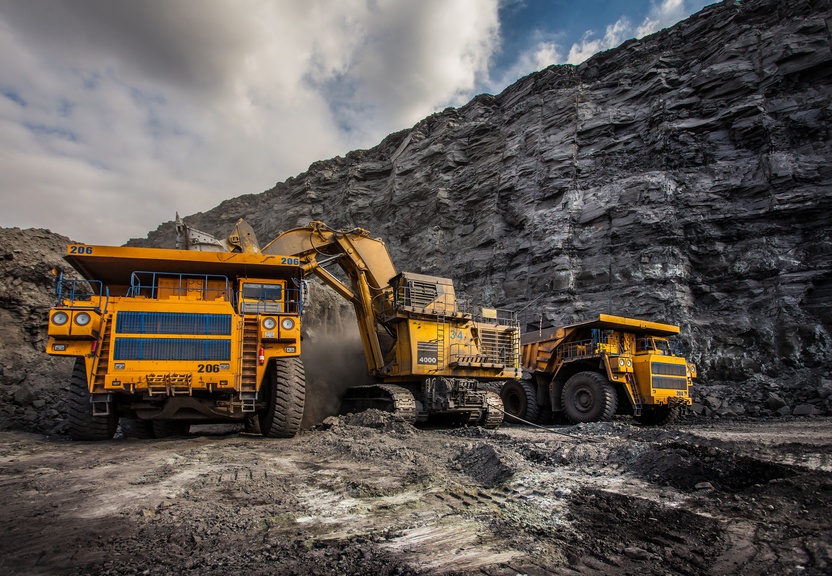
Yes, China pumped the brakes on importing North Korean coal early in 2017, and Reuters reports coal, lead, and iron imports to China from North Korea dropped drastically. Yet many experts believe the country is still making money by selling coal to its neighbor to the north. How? By engaging in off-the-books trade that is harder to trace.
Next: Talk about making money.

2. Counterfeiting

american dollar bills
North Korea has been counterfeiting Chinese currency as well. | halduns/iStock/Getty Images
If you can’t legally make money, why not just fake it? That’s North Korea’s thinking. In 2009, a man was sentenced to more than 12 years in prison for successfully passing millions of dollars of counterfeit bills in Las Vegas casinos. It wasn’t an isolated case. That same year, a Taiwanese woman shipped close to $400,000 in counterfeit U.S. currency to herself. She was caught by the FBI, but only after smuggling and spending thousands of dollars of counterfeit money. It’s not just U.S. currency that’s being faked, as United Press International writes that Chinese currency is being printed in North Korea.
Next: A world wide web of deceit.

3. Cybercrime

They’re stealing money through hacking. | iStock/Getty Images
It is believed North Korea launched a 2014 hack on Sony Pictures. British intelligence believes North Korea launched a malware attack that hit a number of hospitals and health centers, and CNBC reports the country was behind a cyberheist that saw $81 million disappear from Bangladesh’s central bank. Even when not stealing money or crashing computer systems, North Korea is lurking on networks and learning weaknesses in preparation for another attack, according to The Diplomat.
Next: It gets by with a little help from its…

4. Friends

Ancient city of Yazd in sunrise lights. Iran
It is believed that Iran shares nuclear information. | silverjohn/iStock/Getty Images
The off-the-books coal and mineral trade with China is just one way North Korea makes money. Sympathetic nationals and other pariah states are helping it get the cash and resources it needs. David Thompson, writing for the non-profit C4ADS, spotlights the case of Chinese citizen Fan Mintian, caught attempting to smuggle weapons from Cuba to North Korea, and that is just one case of foreign citizens helping. It is believed Iran, another enemy of the United States, and North Korea share nuclear information and resources.
Next: The country is a major player in this illegal activity.

5. Heroin

heroin
They’re the third largest heroin producer. | John Moore/Getty Images
That North Korea has been refining and distributing heroin around the world is an open secret. The Australian navy seized a North Korean ship transporting more than 100 kilograms of the drug in 2003. In fact, U.S. officials say the country is the world’s third-leading heroin producer behind Afghanistan and Burma, and the CIA calls out North Korean diplomats for engaging in heroin trafficking on a regular basis.  
Next: Another addictive agent helps line the pockets.

6. Methamphetamine

Methamphetamine
North Korea makes its money off of addicts. | Hannelore Foerster/Getty Images
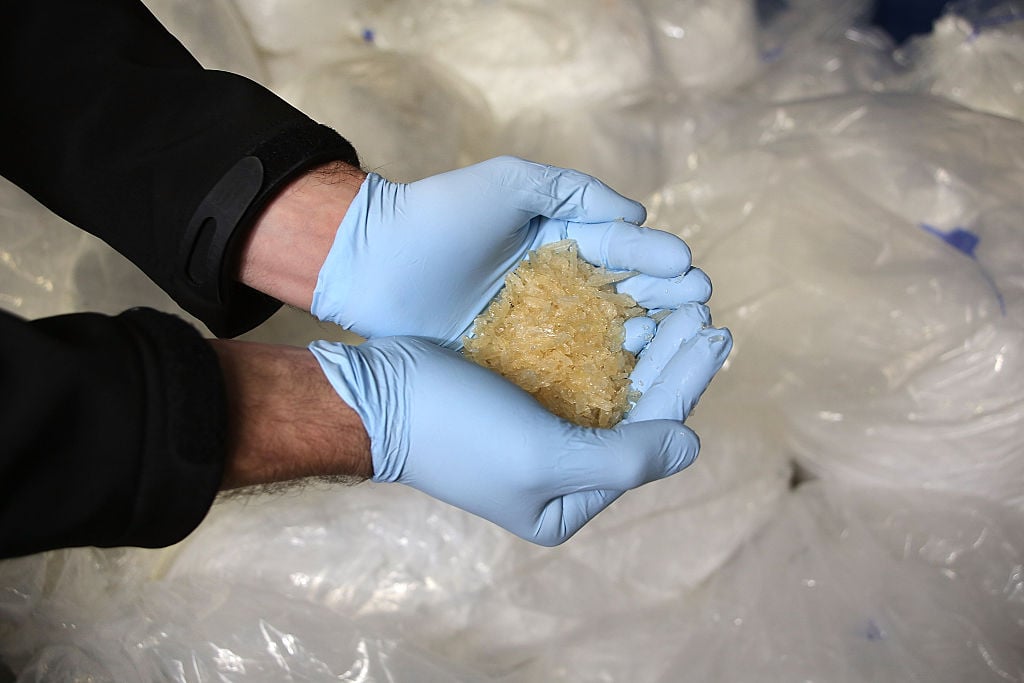
As we’ve just seen, North Korea uses the heroin trade to make some off-the-books money. It seems one drug isn’t enough, as the country sends methamphetamine around the globe. The U.S. Department of Justice convicted three international conspirators of attempting to import 100 kilograms of North Korea-produced meth in 2015. That was three years after the same trio sold 30 kilos of the substance. The narcotics North Korea produces are in addition to fake pharmaceuticals, like Viagra, it makes.
Next: Putting the work in Workers’ Party of Korea.

7. Slave labor

Enslaved person
They have been profiting off of enslaved labor and sex slavery. | rodjulian/iStock/Getty Images
The Workers’ Party of Korea is the political party running North Korea, and slave labor within the country has long been utilized. Apparently, it is also an export. Citizens up to the task work jobs overseas, with handlers watching their every move. Wages are mostly or entirely skimmed and the workers receive nothing, or close to it. A CNN report claims this scam brings in more than $1 billion annually.
Next: An ICBM for an ICBM.

8. Weapons

Chemical weapons
North Korea attempted to smuggle chemical weapons to Syria. | Nigel Treblin/Getty Images
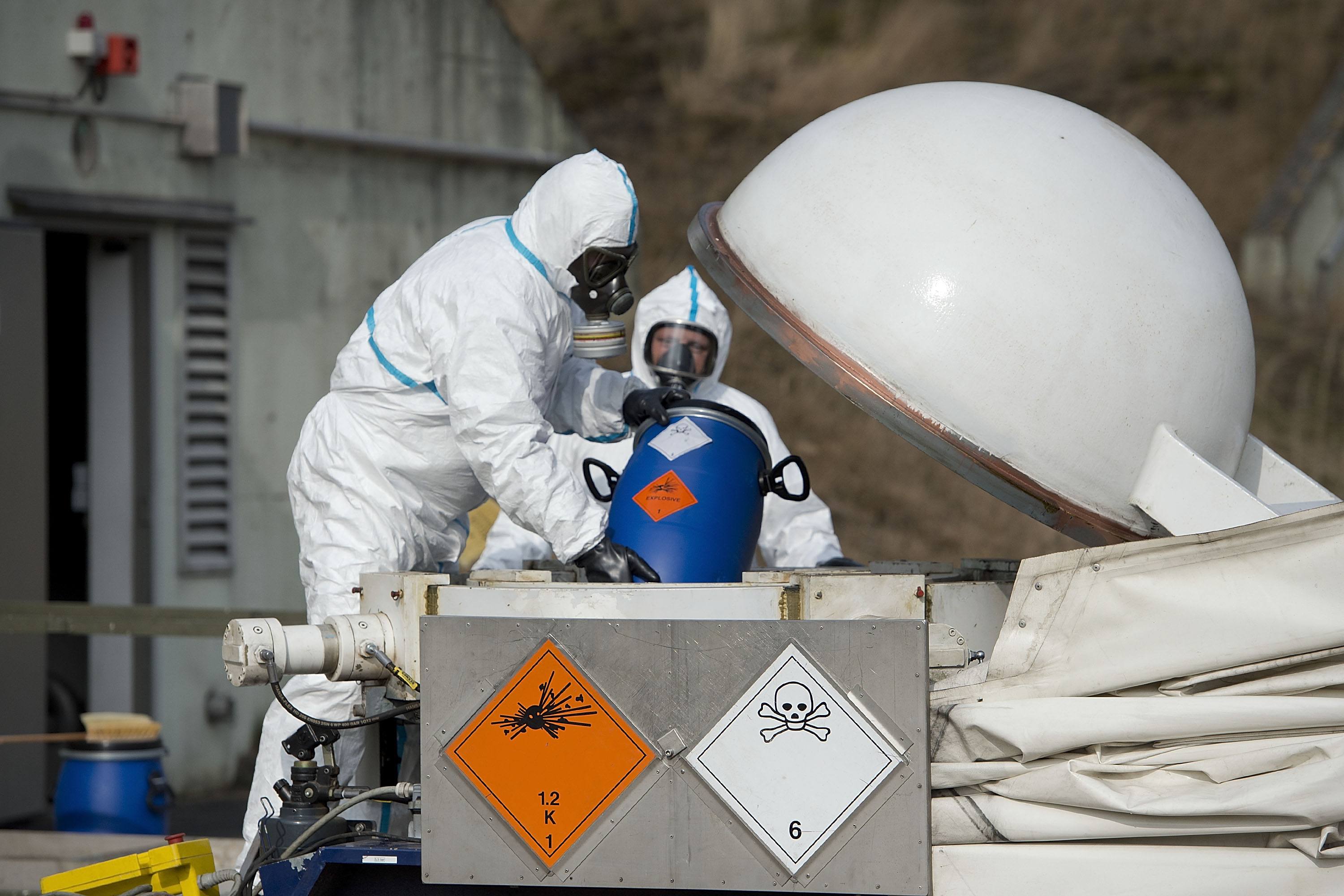
Because of sanctions, North Korea should not be importing or exporting weapons, but that hurdle has been easy to overcome. Through years of unchecked trading, it stockpiled cash and other resources, which it uses to manufacture its own weapons. When there’s a surplus, it sells those weapons out to the highest bidder. In one incident, North Korea was caught trying to smuggle chemical weapons to Syria. If you’re not keeping track of world affairs, that’s one shady and generally-despised government trying to help out another one.

Culled fromWallstreetcheatsheet

Wednesday, 24 January 2018

The pension crisis and how to survive it - we explain all

The state pension fund is running out - Tricia Phillips explains what this means as well as how you can ensure that whatever happens, you can face life after work with confidence
The state pension is groaning under pressure from an ageing population.
A report from Government advisers has revealed the National Insurance Fund, which pays state pensions and other social benefits, will run out of cash in the 2030s .
This means future pensioners face lower state pensions or younger workers may get slapped with higher National Insurance contributions.
Andrew Tully, pensions technical director at Retirement Advantage, said: “There is no cast-iron guarantee that the system pensioners enjoy today will be around in the same guise in the years to come, so it makes sense to take control of our own retirement future.”

With uncertainty ahead, here’s some top tips and advice...

15 top tips to help you save

  1. Don’t rely on the state pension - Whatever your age. The state pension age keeps rising. Young people now face working until their 70s and beyond before they will qualify - and get less than they expected.
  2. Pensions aren’t as complex as they seem - During your working life, you put a bit of cash away from your earnings each month and that builds up to create a pot of money to see you through retirement. Then you cash them in and buy a pension income.
  3. It costs less than you think to save - Tax relief on pension contributions is a generous Government giveaway. Every £100 you put into a pension only costs you £80 with tax relief. For higher-rate taxpayers it’s even better.
  4. Start saving early - In your 20s, or as soon as you start work, is the time to start the long-term savings bug. Andrew Tully says to build up a £100,000 pot by age 65, you’ll need to save £91 a month from age 25, £148 from age 35 and £266 from age 45. This is because of compound interest – where you earn interest on interest over the years.
  5. Stay autoenrolled in your workplace pension - Don’t opt-out of a workplace pension – it’s turning down “free money” from your employer. Under auto-enrolment, you make contributions into your workplace pension and your boss chips in to boost savings.
  6. Put in more than the minimum - The current minimum legal contributions into workplace schemes are 1% from workers and 1% from bosses. This increases to 3% from workers and 2% from bosses in April, and to 5% from workers and 3% from bosses in 2019. Some firms will match employee contributions up to a higher level.
  7. Don’t forget about your pension savings - Don’t leave your hard-earned cash languishing. Keep an eye on it to ensure you’re on track to build up the funds you will need. Take notice of annual statements so you know where you stand and can decide if you need to chip in a bit more.
  8. It’s never too late to start saving - Workers in their 50s still have time to build up a bit of a nest egg. Chances are you’ll be working until your late 60s, so there is time. Every £1 saved into a pension will give you that plus a bit more in retirement.
  9. If you’re self employed - You’ll need to sort out your own pension savings. Under 40s can use the Lifetime ISA, which gets a 25% Government top-up on up to £4,000 each year, until age 50. Over 40s will need to set up a private pension. Visit unbiased.co.uk to find an adviser.
  10. Think you can’t afford to save - If you get a shop-bought coffee each day at £2-plus a pop, giving up one or two a week will free-up cash to save for your older age. Once you start looking at small ways like this to make savings, you’ll be well on your way to a more secure financial future.
  11. Keep an eye on costs - Fees charged by pension providers can vary and eat into your funds. Jamie Smith-Thompson, managing director of pension advice specialist Portafina, says: “What seems like a small change could make a big difference. For example, reducing your annual provider fees by just 1% could mean £25,000 more in your pot over 20 years.” Check the market for schemes with lower fees and think about switching.

  12. Review where - your money’s invested - Ensure your pension savings are working hard for you. Check the funds you’re invested in match your attitude to risk. Keep an eye on how your savings are growing, and move funds if you think you can achieve a better return.
  13. Flexibility to suit your needs - The pensions freedoms put you in control of when and how you access your savings from the age 55. But be wary of dipping into your pot too soon. Get free advice from the Government’s Pension Wise via pensionwise.gov.uk or call 0800 138 3944 to book an appointment.
  14. Find old pensions - Most of us will work for a number of employers and it can be easy to lose track or forget about funds from past jobs. Get free help to track down lost pensions from the Government at gov.uk/find-pension-contact-details .
  15. Don’t let crooks steal your cash - If you get a cold call offering a free pensions review or an investment offer that sounds too good to be true, put the phone down. Crooks are just waiting to rip you off. Don’t rush into transferring funds or accessing savings before ensuring a person or firm is on the Financial Conduct Authority’s register at register.fca.org.uk . Also check the FCA Scam Smart page at fca.org.uk/consumers/protectyourself-scams .

    Culled from Mirror Pension

Thursday, 11 January 2018

Start investing at 50, get a £1m pension pot at 67

Too late to start? Lottie Wride is 46 and has no pension Credit: Jay Williams
Not long ago, people in their 50s would be deemed to have left it too late to begin saving for retirement. Only a lifetime of pension contributions, allied with some investment growth, could produce a large enough pot to produce a viable income in later life, the conventional wisdom went.
But while “the magic of compound interest” does allow money put aside early to grow spectacularly, most young people do not have much spare cash to invest. Only in middle age can most workers begin to put serious sums aside.
Wages peak in the mid 40s and 50s (with men’s salaries reaching their high point about a decade later than women’s), according to official statistics.
Not only are incomes at or near their zenith in middle age, but two major costs of living are likely to have declined or ceased entirely. Mortgage terms are typically 25 years, meaning that many people who bought properties in their early 20s will be debt free by their 50s.
Likewise, the cost of raising children dwindles once they embark on higher education courses funded by student loans.

In figures: the pension pot you can expect if you start at 50

Generous tax perks on pensions and Isa investments help even those who start to save from scratch at 50 to build a sizeable pot quickly.
A 50-year-old who earns, say, £70,000 a year could, starting from nothing, build up a pension worth £985,800 by 67 if they saved the maximum amount allowed each year.
This figure, calculated for Telegraph Money by pensions firm Old Mutual Wealth, assumes annual returns of 4pc after charges, a realistic rate given today’s investment market, and that the pensions “annual allowance” remains at its current level of £40,000 a year.
Even if annual returns were 75pc lower (at 1pc after charges) the pot would be worth £744,600 by 67.
Show more
Saving £40,000 a year may seem a tall order, but remember that this figure includes the tax relief that is applied to all pension savings. Someone who earns £70,000 a year would have to contribute only £27,000 from their own bank account to add £40,000 to their pension pot.
Someone who pays the basic rate of 20pc would have to spend £32,000 to save the same amount.
If saving through a personal pension, rather than a scheme operated by a company, higher-rate taxpayers will need to claim back the extra 20pc tax relief via a tax return. All pension savers receive relief at the basic rate automatically.
Under “automatic enrolment” rules, employers are required to save into a pension on your behalf. Many firms will match the money you save, capped at a proportion of salary; 5pc is a typical figure.
When it comes to taking money out of your pension in retirement, you can take 25pc as a tax-free lump sum and then pay income tax on further withdrawals, just as you would on any other income.
Isas – another main option for building up a pot of savings for retirement – work the other way round: you contribute out of your after-tax income but make withdrawals tax free. In the 2017-18 tax year you can put up to £20,000 into an Isa. Saving at that level for the same period as the pension example (17 years) with 4pc returns would produce a portfolio worth £372,295.
Since the “pension freedom” reforms were introduced in 2015, unspent pensions have been able to pass down the generations extremely tax efficiently. Isas, on the other hand, form part of your estate on death and will be subject to inheritance tax.
It can, therefore, make sense to hold a combination of pensions and Isas in retirement, spending the latter first if you want to maximise your legacy.

Is the decade before you retire the most important?

While some begin to invest only when they reach their 50s, millions of us have been squirrelling money away for decades.
New research produced by Aegon, the insurer, offers useful insight into the relative importance of investment gains and your actual contributions for those who started early. In essence, investment returns become gradually more important, relative to the amount you save (see graphic, up).
If we look at someone who has saved for 40 years, the analysis found that the saver’s contributions accounted for the bulk of the portfolio’s value in the first 30 years – £83,484 against £71,836 from investment returns.
Yet in the last 10 years of investment, the opposite was true. During that period, investment returns were far more important, accounting for £80,680 of the total, against £33,844 in contributions. However, as Aegon’s Nick Dixon pointed out: “It’s important to remember that investment losses will have as big an impact as investment gains.”
Mark Fawcett, the chief investment officer of Nest, the government-backed provider of workplace pensions, said: “This research debunks investment orthodoxy that says you should maximise risk when you’re young. What really matters are investment returns once you’ve built up a decent pot towards the end of your working life.”
Nest, which runs the savings of more than five million people, based its investment strategy around this concept. It takes relatively little investment risk for younger savers on the grounds that any missed returns can quickly be recovered once pot sizes are larger.

Telegraph

Tuesday, 9 January 2018

One in 5 Brits are being lured into holiday compensation claims - that could lead to a prison sentence

A worrying 9.5 million people have been approached about making a potential claim, according to watchdog ABTA
Term-time holiday bookings increases and summer hol booking down since father's High Court victory
Abta said in some cases, holidaymakers were being talked into making claims while on holiday
Millions of holidaymakers are being teased into making compensation claims for sickness abroad - despite not actually falling ill, it's been revealed.
According to a YouGov survey, almost one in five people have been contacted about making a compensation claim for holiday sickness to date - however, they're unaware that false or overinflated claims could lead to a jail sentence.
The most common way people said they were approached was over the phone, followed by text and email.
Some people also reported being contacted on social media and some were approached in person, including in airports or while on holiday.
The figures have been released as part of Travel Association ABTA’s ‘Stop Sickness Scams’ campaign which highlights that false claims are costing the travel industry tens of millions of pounds each year.
The body is now calling for the urgent closure of a loophole in the law, which enables claims management companies and legal firms to make more money in fees from sickness claims abroad, than they’re able to from personal injuries in the UK.
ABTA said that some firms are contacting people out of the blue, encouraging them to make a false claim and often misleadingly saying there is a pot of money waiting to be claimed - which isn't necessarily the case.
In reality, making a false compensation claim is an act of fraud, and if prosecuted could result in a fine, criminal record or jail term of up to three years.
In October 2017 a couple from Merseyside received a prison sentence after being found guilty of making a fraudulent sickness claim. Deborah Briton was sentenced to nine months and her partner Paul Roberts was jailed for 15 months.
Video Loading
'Insurance scam' as man claims to have swerved for dog
ABTA's findings come six months after the Government announced its plans to clampdown on the rise in false sickness claims.
It's now calling for a summer 2018 deadline to ensure this year's holidaymakers don't fall victim to the so-called scams.
Mark Tanzer, ABTA’s chief executive said: "Unscrupulous claims management companies are encouraging people to make a false sickness claim which could land them with a large fine or even a prison sentence.
"False claims don’t just make UK holidaymakers vulnerable to serious penalties – they’re also costing travel companies and hotel owners tens millions of pounds and tarnishing the reputation of the British abroad.
"Closing the loophole in the law in time for the 2018 holiday season will make a big difference in tackling fraudulent sickness claims."
If you receive a cold-call urging you to make a holiday sickness claim, you can report it to the Claims Management Regulator.
Culled from Mirror pension

Thursday, 26 October 2017

Pensions scam: Gov. orders probe into alleged malpractice

Pension
Gov. David Umahi of Ebonyi has ordered probe into allegations of malpractices in the payment of pensions of retired civil servants in the state.
Some staff of the audit unit of the office of the Auditor- General of the state have been accused of extorting money from pensioners to facilitate their pension payments.
Umahi, in a release signed by his Chief Press Secretary, Emmanuel Uzor, expressed dismay over the alleged extortions.
According to him, the state government will do everything within its powers to get to the root of the matter.
“The issues surrounding the non-payment of pension and gratuities in the state had been hinged on criminal padding and inflation of pensions and gratuities.
“This criminal inflation and doctoring of figures as noticed in the payroll of pensioners, led to setting up a special committee in charge of harmonising entitlements accruable to pensioners in the state.
“The committee headed by the Deputy Governor has been working assiduously to ensure that no pensioner is shortchanged or omitted,” he said.
Umahi expressed surprise that some retired civil servants still alleged extortion by officials of the audit unit, even when the accruable payments were not within the jurisdiction of the auditor-general.
“It is possible that those who alleged extortion were the bad eggs who inflated or altered their entitlements in connivance with some staff of the audit department,” he said.
READ: Maina`s reinstatement an embarrassment – APC
The governor said that such people had refused to appear before the deputy governor led-harmonisation committee to prevent the determination of their proper entitlements.
“The people involved in this issue should appear before the office of the deputy governor saddled with the speedy payment of pensions instead of looking for shortcuts to defraud the state government. .
“Consequently, all retired civil servants who have not completed their physical capturing should immediately do so as those that have completed theirs have been duly paid,” he said.
The governor said that he had directed the Head of Service, the auditor-general and the Fiscal Responsibility Commission of the state to expeditiously investigate the alleged pension scam.
“Anybody found culpable will be made to face the wrath of the law as this administration will not tolerate such deliberate sabotage of government policies and programmes,” he added.
He directed the pensioners allegedly exploited to report to the office of the Chief Press Secretary, Government House, Abakaliki, and officially lodge their complaints,” he said.

PM news